Advertisement
Living Far from Town Shouldn't Mean Missing Out on Free Food Benefits
If you live in a rural area and have heard about the Commodity Supplemental Food Program (CSFP), you might already know it offers monthly food boxes packed with nutritious staples like canned fruits, vegetables, meat, cereal, pasta, cheese, juice, and shelf-stable milk. These boxes are available at no cost to low-income seniors age 60 and older. But for many older Americans living miles from the nearest town, CSFP food box access for rural seniors without transportation can feel like an impossible puzzle. The good news is that real solutions exist, and this article walks you through them step by step.
Why Rural Seniors Face Unique Barriers to CSFP
CSFP is a federally funded program administered by the U.S. Department of Agriculture (USDA) and distributed through local food banks, community organizations, and state agencies. In cities and suburbs, distribution sites are often plentiful and easy to reach. In rural communities, the picture looks very different.
- Distribution sites may be sparse. Some rural counties have only one pickup location, and it may be in a town that takes 30 to 60 minutes to reach by car.
- Pickup days are often once a month. Miss the scheduled date and you may wait another full month for your box.
- Public transportation is limited or nonexistent. Many rural areas have no bus service, and ride-share apps may not operate in remote zip codes.
- Physical limitations add another layer. Seniors dealing with mobility challenges may find it hard to drive long distances or carry heavy boxes of food.
These barriers are real, but they are not insurmountable. Over 700,000 seniors nationwide already participate in CSFP, and program administrators are well aware that reaching rural participants requires creative thinking.
Solution 1: Designate an Authorized Pickup Representative
One of the simplest and most underused options available to rural CSFP participants is designating someone else to pick up your food box on your behalf. Most state agencies that administer CSFP allow enrollees to name an authorized representative — a trusted family member, neighbor, friend, or caregiver — who can collect your monthly package for you.
To set this up, you typically need to complete a short authorization form through your local CSFP agency. Requirements vary by state, but the process is usually straightforward. If you already have someone who makes regular trips into town for errands, this can be a natural fit. Ask your local distributing agency what paperwork is needed and whether the authorization can be submitted by phone or mail to avoid an extra trip.
Solution 2: Look for Mobile Distribution Events
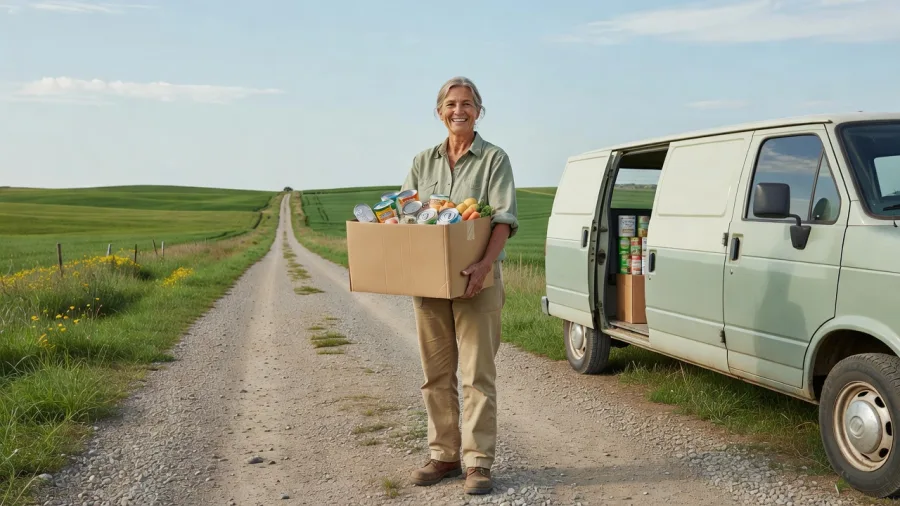
Many food banks and community organizations that run CSFP have recognized the rural access problem and responded with mobile distribution — bringing the food boxes directly into underserved communities rather than waiting for participants to come to them.
Mobile CSFP events may be held at churches, community centers, fire stations, senior centers, or even in parking lots of rural grocery stores. These events are often scheduled on a rotating basis throughout a county or region. They do not always get wide publicity, so you may need to ask directly.
Here is how to find out if mobile distribution is available near you:
- Call your local food bank and ask specifically about mobile or satellite CSFP distribution in rural areas.
- Contact your county's Area Agency on Aging (AAA) — they often coordinate with food programs and may know of upcoming mobile events.
- Check with your nearest senior center, even if it is in a town some distance away. They frequently post information about mobile food programs.
Solution 3: Tap Into Rural Transportation Programs
If you need to travel to a distribution site yourself, you may not have to do it alone or in your own vehicle. Several programs exist specifically to help rural seniors with transportation, and some are directly connected to food access.
- Eldercare Locator: Run by the U.S. Administration on Aging, this free service connects seniors to local resources including transportation assistance. You can reach them at 1-800-677-1116.
- Section 5310 transit programs: These federally funded programs provide transportation for older adults and people with disabilities in rural areas. Your local AAA can tell you what is available in your county.
- Volunteer driver networks: Many rural communities have informal or organized volunteer programs where neighbors help seniors get to appointments and errands. Faith-based organizations often run these networks.
- 2-1-1 helpline: Dialing 2-1-1 connects you to a local specialist who can identify transportation options, food programs, and other community services available where you live.
Solution 4: Ask About Waitlists and Alternative Local Sites
CSFP operates through a capped enrollment system, which means some areas have waitlists. If you are already on a waitlist or have not yet enrolled, it is worth asking your state agency whether there are multiple distribution sites in your region, some of which may be closer to you than you realize. State agencies sometimes add new sites, especially when demand in a rural area is documented. Your inquiry could even help prompt expanded coverage in your community.
A Note on Enrollment
To enroll in CSFP, you must meet income guidelines set by your state agency, be age 60 or older, and apply through a local distributing organization. Income limits are based on federal poverty guidelines and vary by household size and state. Some areas have waitlists due to high demand, so applying as soon as possible is always a good idea.
You Deserve These Benefits — Do Not Give Up
The CSFP monthly food box is a meaningful benefit, valued at approximately $50 or more each month in nutritious groceries. For seniors on fixed incomes in rural areas, that kind of support can make a genuine difference in food security and overall health. Distance and transportation challenges are real, but they do not have to be the final word.
If you have been putting off enrolling in CSFP because you were not sure how you would get there, now you have options. Reach out, ask questions, and let your local agencies help you find a path that works.
Your next step: Visit the USDA CSFP program page at ams.usda.gov to find contact information for your state's administering agency, or call the Eldercare Locator at 1-800-677-1116 to connect with local food and transportation resources near you. Do not wait — monthly enrollment windows can be limited, and the sooner you apply, the sooner those food boxes start arriving.
Advertisement