Advertisement
If you live by yourself and you are 60 or older with a limited income, the CSFP food box for seniors living alone could be one of the most practical benefits available to you right now. The Commodity Supplemental Food Program — known as CSFP — delivers a monthly box of shelf-stable groceries worth approximately $50 or more through local food banks and community organizations. But here is the honest challenge many solo recipients face: a box designed to supplement a household can feel like a lot for one person. This guide will help you make the most of every item, reduce waste, and understand how living alone affects your eligibility and pickup experience.
What Comes in a CSFP Food Box for Seniors Living Alone
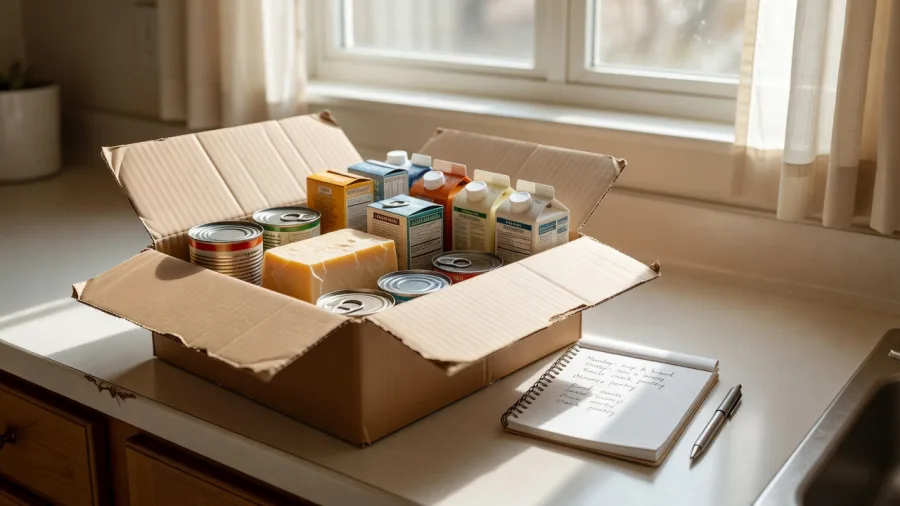
Each monthly package is assembled by the USDA and distributed through local agencies, so the exact contents can vary slightly by region and season. Generally, you can expect a combination of the following:
- Canned fruits and vegetables — corn, green beans, peaches, pears, and similar staples
- Canned or shelf-stable meat — often tuna, chicken, or salmon
- Cereal — typically one or two boxes of a whole-grain variety
- Pasta or rice — a reliable base for many simple meals
- Cheese — usually a block of American or similar processed cheese
- Juice — shelf-stable bottles or cans
- Shelf-stable milk — boxed UHT milk that keeps without refrigeration until opened
For a person cooking for one, this is genuinely useful food. The key is knowing how to work through it steadily so nothing goes to waste.
Smart Portioning Strategies for a Single-Person Household
When you are only feeding yourself, a can of vegetables or a block of cheese can last several meals — or go bad before you finish it. Here are practical ways to stay ahead of spoilage.
Divide and Freeze Right Away
The moment you get home with your CSFP box, take stock of what is perishable once opened. The cheese block is the most important item to address quickly. Cut it into smaller portions — think enough for a few sandwiches or a week of snacks — and wrap each portion tightly in plastic wrap or a zip-lock bag before freezing. Cheese freezes well and can go straight from freezer to refrigerator the night before you plan to use it.
Shelf-stable milk, once opened, should be treated like regular milk and used within seven to ten days. If you know you will not finish a full box that quickly, consider splitting it into smaller containers and freezing them in cup-sized portions for use in oatmeal, soups, or baking.
Build a Simple Weekly Meal Rotation
Seniors living alone often do best with a loose weekly rhythm rather than rigid meal planning. Try building two or three simple go-to meals around CSFP items. For example:
- Monday and Thursday: Pasta with canned tomatoes or canned meat stirred in
- Tuesday and Friday: Soup made with canned vegetables and broth
- Wednesday: Tuna or salmon on crackers with canned fruit on the side
Rotating through combinations like these helps you use canned goods before they pile up month after month. Canned goods do last a long time, but rotating stock — using older cans first — keeps your pantry organized and your meals fresh.
Use Your Juice and Cereal Early in the Month
Juice and cereal are usually the fastest-moving items in the box. Make it a habit to open them in the first week so they become part of your breakfast routine rather than sitting untouched when the next month's box arrives.
What to Do With Surplus: Sharing Is Allowed
Many CSFP participants who live alone find they simply cannot use everything before the next box arrives. The good news is that sharing surplus food is perfectly acceptable — and even encouraged in the spirit of community.
Share With a Neighbor or Friend
If you have a neighbor who is also a senior on a fixed income, consider informally swapping or sharing items neither of you can finish alone. This kind of neighbor-to-neighbor sharing is one of the most time-honored ways that tight-knit communities stretch limited resources.
Donate Unopened Items to a Local Food Pantry
Unopened, unexpired canned goods and other non-perishables from your CSFP box can be donated to a local food pantry. Many pantries welcome these contributions, and it ensures food goes to someone who needs it rather than a landfill. Call your local pantry ahead of time to confirm they accept donations and ask about drop-off hours.
How Living Alone Affects CSFP Eligibility and Pickup
CSFP eligibility is based on age and income, not household size. You must be 60 years of age or older, and your income must fall at or below a certain threshold tied to the federal poverty guidelines — these limits are updated annually and vary by state, so check with your local distributing agency for current numbers.
As a single-person household, your income limit will be calculated for one person, which often means the threshold is lower in raw dollar terms than for couples or families. This is worth knowing when you gather your documentation. You will typically need to provide:
- Proof of age (birth certificate, driver's license, or Medicare card)
- Proof of address (a utility bill or lease agreement in your name)
- Proof of income (Social Security award letter, pension statement, or tax return)
Living alone also means pickup logistics fall entirely on you. If you have mobility challenges or do not drive, ask your local CSFP distributing agency whether home delivery is available in your area — some locations offer it. You may also be able to designate a trusted person, such as a family member or neighbor, to pick up your box on your behalf. Bring written authorization and a copy of your ID if you plan to send someone in your place.
How to Find CSFP Distribution Near You
CSFP is not available in every county, but it operates in most states and U.S. territories. The best way to find a nearby distribution site is to contact your local food bank directly or reach out to the national network.
Over 700,000 seniors across the country already receive a CSFP food box each month. If you qualify, there is no reason to leave this benefit unclaimed.
Waitlists do exist in some areas due to high demand, so it is worth applying sooner rather than later. Getting on a waitlist now means you are that much closer to receiving your first box when space opens up.
Your Next Step
If you are a senior living alone and you think you may qualify, do not wait. Visit the USDA Food and Nutrition Service website and search for CSFP to find contact information for your state agency. You can also call 211 — the nationwide social services helpline — to be connected with a local CSFP distributor or food bank in your area. A single phone call could be all it takes to start receiving a free monthly box of groceries that makes a real difference in your daily life.
Advertisement