Advertisement
If you're 60 or older and watching every dollar, you may be leaving free groceries on the table. The Commodity Supplemental Food Program (CSFP) delivers monthly food boxes packed with nutritious staples to low-income seniors across the country — and understanding the CSFP income eligibility requirements by state is the first step to finding out if you can get them. This guide breaks down how the program works, what counts as income, and how to check your eligibility no matter where you live.
What Is the CSFP and What Do You Get?
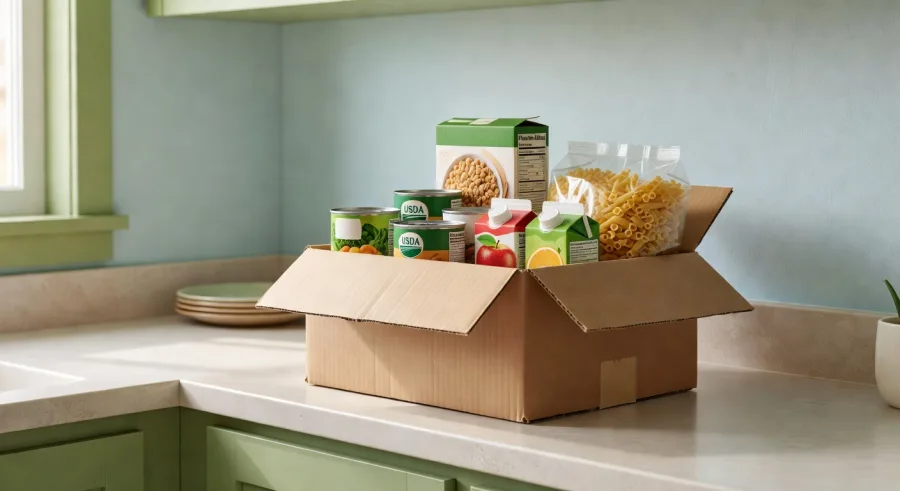
The Commodity Supplemental Food Program is a federally funded program administered by the U.S. Department of Agriculture (USDA). Each month, eligible seniors receive a box of food worth approximately $50 or more — filled with items like canned fruits and vegetables, canned meat, cereal, pasta, cheese, juice, and shelf-stable milk. These are real, usable staples that can meaningfully stretch a tight grocery budget.
More than 700,000 seniors participate in CSFP nationwide, but millions more may be eligible and simply don't know it. The food is distributed through local food banks, community organizations, and other USDA-authorized sites — so there's no complicated ordering process. You pick up your box at a local distribution point each month.
CSFP Income Eligibility Requirements by State: The Basics
To qualify for CSFP, you must meet two basic requirements:
- Age: You must be 60 years of age or older.
- Income: Your household income must fall at or below a set percentage of the Federal Poverty Level (FPL).
At the federal level, CSFP income limits are generally set at 130% of the Federal Poverty Level — the same threshold used by several other nutrition assistance programs. However, exact dollar amounts vary based on household size and are updated each year when the federal poverty guidelines are revised.
Because the cost of living and program administration differ from state to state, some states may apply slightly different thresholds or have their own additional criteria layered on top of federal rules. That's why it's important to check with your specific state or local CSFP provider rather than relying on a single national figure.
Why Income Limits Change Year to Year
The federal poverty guidelines are updated annually, typically in January or February. When they go up — even slightly — the income ceiling for CSFP eligibility goes up with them. This means someone who was told they didn't qualify in a previous year might qualify today. It's always worth checking again, even if you were turned away before.
What Counts as Income for CSFP?
This is where many seniors get tripped up. Not everything that comes into your household is counted the same way under CSFP rules. Here's a general breakdown:
- Counted as income: Social Security benefits (including SSI), pension payments, wages or self-employment earnings, rental income, and most regular cash payments you receive.
- Generally not counted: SNAP benefits, housing assistance, energy assistance (like LIHEAP), and certain other in-kind benefits do not count as income for most federal nutrition programs.
One important note: if you already receive Medicaid or Supplemental Security Income (SSI), you may automatically meet the income requirements for CSFP without needing to provide additional documentation. This is called categorical eligibility, and it can simplify the application process significantly.
Quick Tip: Even if your Social Security check seems too high, run the numbers before assuming you don't qualify. Many seniors are surprised to find they fall within the income limits after all deductions and household size are taken into account.
Does CSFP Availability Vary by State?
Yes — and this is one of the most common sources of confusion. Unlike some federal programs that are available everywhere, CSFP is not offered in every county or ZIP code. Program slots are limited, and some areas have waiting lists. Distribution sites are concentrated in regions where USDA funding and local organizations have partnered to run the program.
States with active CSFP operations include many across the Midwest, South, and parts of the Northeast and West, but coverage can be uneven within a state. A senior in one county may have easy access to a monthly distribution site while a neighbor in the next county may not. Checking availability in your specific area is essential.
How to Find CSFP Income Limits and Sites in Your State
Here are the most reliable ways to get accurate, up-to-date CSFP income eligibility requirements for your state:
- Contact your local food bank: Most regional food banks are CSFP distribution partners and can tell you the current income limits, available sites, and whether there's a waiting list in your area.
- Visit the USDA Food and Nutrition Service website: The official USDA site lists CSFP state contacts and program details. Search for your state's CSFP administering agency.
- Call 211: Dialing 211 connects you to local health and human services resources, including food programs. Operators can help direct you to CSFP sites near you.
- Reach out to your Area Agency on Aging (AAA): Your local AAA often has up-to-date information on senior food programs including CSFP. You can find your local agency through the Eldercare Locator at eldercare.acl.gov.
Common Misconceptions About CSFP
Before you talk yourself out of applying, let's address a few myths that keep eligible seniors from getting help:
- Myth: If I get Social Security, I make too much. Not necessarily. Many seniors receiving modest Social Security payments fall well within the 130% FPL threshold, especially when household size is factored in.
- Myth: CSFP is only for people who are very poor. The program is designed for low-to-moderate income seniors. You don't need to be in crisis to qualify.
- Myth: I can't get CSFP if I already get SNAP. In most cases, you can receive both CSFP and SNAP at the same time. They are separate programs with separate benefits.
- Myth: The application process is too complicated. Most CSFP sites have simple, one-page applications. Staff are typically trained to help seniors complete them on the spot.
Take the Next Step Today
If you're 60 or older and have a modest income, there's a real chance you qualify for free monthly food boxes through CSFP. The CSFP income eligibility requirements by state are updated regularly, so even if you've looked into this before, it's worth a fresh look.
Here's what to do right now:
- Call 211 to find CSFP distribution sites in your area.
- Visit the USDA Food and Nutrition Service website and search for your state's CSFP contact.
- Contact your local food bank directly and ask if they run a CSFP program.
- Reach out to your Area Agency on Aging through the Eldercare Locator for local guidance.
You've earned these benefits. Don't leave a free box of groceries unclaimed every month simply because you weren't sure you'd qualify. Take five minutes to check — it could make a real difference in your monthly budget.
Advertisement