Advertisement
Are You Automatically Running Every Prescription Through Insurance? You May Be Paying Too Much
Most people hand over their insurance card at the pharmacy counter without a second thought. It feels like the smart move — after all, that is what insurance is for. But here is a truth that surprises a lot of seniors: sometimes using a free GoodRx coupon on certain prescriptions is cheaper than your Medicare or private insurance copay. For anyone searching to understand when GoodRx is cheaper than insurance copay for seniors and when to skip insurance altogether, this article walks you through exactly what you need to know.
GoodRx is a completely free service — no membership fee, no sign-up cost — that searches hundreds of pharmacies to find the lowest available price on your medications, then gives you a coupon you can use right at the counter. It is accepted at over 70,000 pharmacies nationwide, including CVS, Walgreens, Walmart, and most major chains. Users save an average of $436 per year, and discounts can reach up to 80% on some drugs.
Why Your Insurance Copay Is Not Always the Lowest Price
Insurance pricing, including Medicare Part D, is set through negotiations between your plan and pharmaceutical companies. Those negotiated prices work well for many medications — but not all of them. Generic drugs in particular can sometimes be priced so low on the open market that a GoodRx discount beats what your plan charges you as a copay.
Here is a simple example of how this can happen: Imagine your Medicare Part D plan charges you a $15 copay for a common generic blood pressure medication. GoodRx might show you a price of $4 or $6 at a nearby pharmacy for the exact same drug and dosage. In that case, paying cash with a GoodRx coupon would save you money — and you would not even need to involve your insurance at all.
This is not a loophole or a trick. It is simply a result of how drug pricing works in the United States, and knowing about it can put real money back in your pocket every month.
GoodRx Cheaper Than Insurance Copay for Seniors: The Medications Where This Happens Most
Not every prescription will be cheaper through GoodRx. Brand-name drugs with no generic equivalent are often priced higher on the open market, and your insurance negotiated rate may be better in those cases. But for a wide range of common generics, GoodRx pricing is frequently competitive — or outright lower. These categories are worth checking every time:
- Generic blood pressure medications such as lisinopril, amlodipine, and metoprolol
- Generic cholesterol medications such as atorvastatin and simvastatin
- Generic diabetes medications such as metformin
- Generic thyroid medications such as levothyroxine
- Common antibiotics and short-term generics prescribed after a procedure or illness
These are medications that tens of millions of seniors take every single month. If even one of yours is cheaper through GoodRx, that savings adds up over a full year.
How to Compare Your Insurance Copay Against GoodRx Before Every Fill
The process takes about two minutes and requires no special knowledge. Here is exactly what to do:
Step 1: Look Up Your Drug on GoodRx
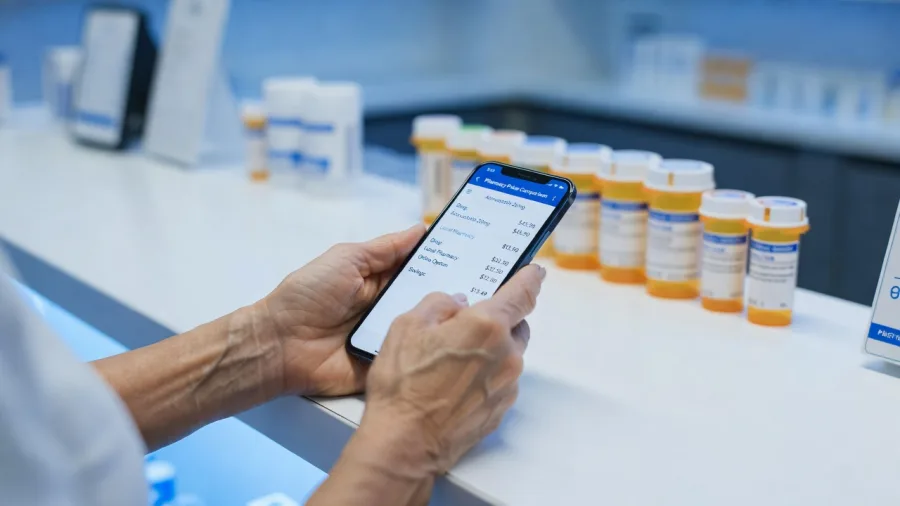
Go to goodrx.com or open the free GoodRx app on your smartphone. Type in the name of your medication, select the correct dosage and quantity, and enter your zip code. GoodRx will show you a list of nearby pharmacies with their current prices and a coupon you can use at the counter.
Step 2: Know Your Insurance Copay
Check your Medicare Part D or private insurance plan documents to find your copay for that specific drug tier. You can also call the number on the back of your insurance card and ask a representative what your out-of-pocket cost will be for a specific medication.
Step 3: Compare and Choose the Lower Price
Simply pick whichever is lower. If your insurance copay is $20 and GoodRx shows $7 at a nearby pharmacy, present the GoodRx coupon instead of your insurance card. If your insurance copay is $5 and GoodRx shows $14, use your insurance as usual.
Important note: When you pay with a GoodRx coupon instead of using your insurance, that purchase typically does not count toward your Medicare deductible or out-of-pocket maximum. For most low-cost generics this does not matter — but if you are approaching your plan deductible or take expensive medications, factor that into your decision.
When to Skip Insurance and Use GoodRx — and When Not To
GoodRx is an excellent tool for lower-cost generics and situations where you need a prescription quickly without insurance involvement. It is also helpful if you are uninsured or between coverage periods. Here are some situations where using GoodRx instead of insurance makes strong sense:
- Your GoodRx price is lower than your insurance copay for a generic drug you take every month
- You are in the Medicare Part D coverage gap (sometimes called the donut hole) and paying higher out-of-pocket costs temporarily
- You need a short-term prescription and do not want to deal with prior authorization delays
- You are uninsured or your insurance does not cover a particular medication
On the other hand, for high-cost brand-name medications or specialty drugs, your insurance plan has usually negotiated much better pricing. Always check both options before assuming — but do not skip the comparison step just because you have insurance.
GoodRx Is Free and Takes Two Minutes to Use
There is no cost to use GoodRx. You do not need to create an account to search prices, though a free account allows you to save your medications and receive price alerts if a drug gets even cheaper at a nearby pharmacy. The coupon is displayed on screen and can be shown to the pharmacist directly from your phone — no printing required.
For seniors on fixed incomes, every dollar saved on monthly medications matters. GoodRx cheaper than insurance copay situations for seniors happen more often than most people realize, and a quick two-minute comparison before each fill is one of the simplest ways to make sure you are never paying more than necessary.
Your Next Step: Check Your Medications Today
Right now, make a list of every prescription medication you take regularly. Then visit goodrx.com and look up each one using your zip code. Compare what you see to what your insurance or Medicare plan charges you. You may find that one or more of your medications is significantly cheaper using a GoodRx coupon — and that savings starts with your very next refill.
It is free, it takes only a few minutes, and it could save you hundreds of dollars this year. That is a comparison worth making every single time.
Advertisement