Advertisement
How to Apply for Medicaid for Seniors: What You Need to Know Before You Start
If you are 55 or older and struggling to afford health coverage, Medicaid may be one of the most valuable programs available to you. It covers doctor visits, hospital stays, prescriptions, lab work, mental health care, and much more — often with no monthly premium and little to no out-of-pocket cost. But knowing how to apply for Medicaid for seniors is not always straightforward, and small mistakes on your application can cause weeks of delays or an unnecessary denial. This guide walks you through every step so you can apply with confidence.
What Medicaid Covers for Adults 55 and Older
Before you apply, it helps to understand what you could be getting. For adults 55 and older, Medicaid typically covers:
- Doctor visits and specialist appointments
- Hospital stays and emergency care
- Prescription medications
- Lab work and diagnostic imaging
- Preventive care and screenings
- Mental health and substance use services
- Long-term care and nursing facility services (in many states)
- Home and community-based care options
Coverage details and out-of-pocket costs vary by state, but the core benefit is the same everywhere: comprehensive health coverage at little or no cost to you.
Step 1 — Check Your Eligibility Before You Apply
Medicaid eligibility is based primarily on your income and household size. In states that expanded Medicaid under the Affordable Care Act, most adults earning up to 138% of the federal poverty level qualify. Other states have different thresholds, and some have specific pathways for older adults, people with disabilities, or those needing long-term care. Income limits change annually and vary significantly from state to state.
The quickest way to check is to visit Healthcare.gov or your state's Medicaid website. Both offer eligibility screening tools that take only a few minutes to complete. You do not need to commit to applying — you are just checking your status first.
Tip: Even if you think you earn too much, check anyway. Many people are surprised to find they qualify, especially after factoring in deductions or medical expenses that some states allow.
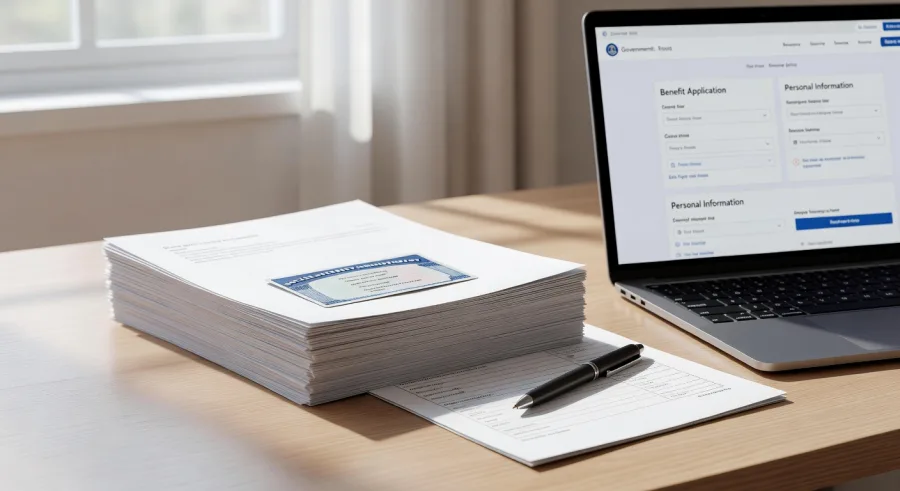
Step 2 — Gather These Documents Before You Sit Down to Apply
One of the biggest reasons applications get delayed is missing or incomplete documentation. Having everything ready before you start will save you significant time. Here is what most states require:
- Proof of identity: Driver's license, state ID, or passport
- Proof of residency: Utility bill, lease agreement, or bank statement showing your address
- Proof of income: Recent pay stubs, Social Security award letters, pension statements, or tax returns
- Proof of citizenship or immigration status: Birth certificate, U.S. passport, or immigration documents
- Social Security number for each person applying in your household
- Information about current health insurance: Any Medicare, employer, or private coverage you already have
- Bank and asset statements: Required in some states for certain Medicaid categories, especially long-term care programs
Some states may ask for additional documentation. When in doubt, gather more than you think you need — it is easier to have extra paperwork than to delay your application waiting for a missing document.
Step 3 — Choose How to Apply for Medicaid
Apply Online
Most states allow you to apply through your state's Medicaid portal or through Healthcare.gov. Online applications can be saved and completed over multiple sessions if needed, which is helpful if you are gathering documents in stages.
Apply by Phone
You can call your state Medicaid office directly and complete the application over the phone with a caseworker. This is a good option if you are not comfortable with online forms or if you have questions as you go.
Apply In Person
Visit your local Department of Social Services, Medicaid office, or in some areas, a community health center or navigator office. Staff can assist you through the process and help you submit everything correctly the first time.
Apply by Mail
Paper applications are still accepted in most states. Download the form from your state Medicaid website, complete it carefully, and mail it with copies — not originals — of your supporting documents.
Common Mistakes Older Applicants Make (And How to Avoid Them)
Knowing how to apply for Medicaid for seniors also means knowing what not to do. These are the errors that most often cause delays or denials for applicants 55 and older:
- Leaving fields blank: Every section matters. If something does not apply to you, write N/A rather than leaving it empty.
- Reporting income incorrectly: Include all sources — Social Security, pensions, rental income, part-time work. Omissions can be flagged as errors and delay processing.
- Submitting originals instead of copies: Always send copies. Originals can be lost and are difficult to replace.
- Missing the asset question for long-term care applications: If you are applying for nursing home or home care coverage, asset rules are different and more complex. Consider speaking with a benefits counselor before applying.
- Not following up after submission: After you apply, your state may send a notice requesting additional information. Missing that deadline — often just 10 to 30 days — can result in an automatic denial.
- Assuming Medicare covers everything: Medicaid and Medicare are separate programs. Many older adults qualify for both, which is called dual eligibility and can dramatically reduce your remaining costs.
Step 4 — What Happens After You Submit Your Application
After submission, your state Medicaid agency will review your application and verify your information. Processing times vary but typically range from a few days to 45 days, depending on your state and the type of Medicaid you are applying for. Disability-related applications can sometimes take longer.
You may receive a request for additional documents. Respond as quickly as possible — prompt responses keep your application moving. Once approved, you will receive a Medicaid card and instructions on how to find participating doctors and services in your area.
If your application is denied, you have the right to appeal. Denial notices will explain the reason and include instructions on how to request a fair hearing. Do not assume a denial is final — many are successfully overturned on appeal.
How to Apply for Medicaid for Seniors: Your Next Step
If you or someone you love might qualify for Medicaid, the best move you can make today is to check your eligibility. Visit Healthcare.gov or search for your state's Medicaid office online to find the application for your area. If you want personalized help, call 1-800-318-2596 — the official Healthcare Marketplace helpline — where trained staff can assist you at no cost. You can also contact your State Health Insurance Assistance Program (SHIP) for free, unbiased counseling from local experts who specialize in helping adults 55 and older navigate their coverage options. Do not wait — coverage can begin sooner than you think.
Advertisement