Advertisement
The Medicare Gap Nobody Warns You About
If you recently enrolled in Medicare and assumed it would cover your teeth cleanings, dentures, eye exams, or eyeglasses, you are not alone in being surprised. The reality is that Original Medicare largely excludes routine dental and vision care — two of the most common health needs for adults over 55. For millions of older Americans, this discovery comes at exactly the wrong time, often when a dentist bill or a new glasses prescription arrives and there is no coverage to lean on.
The good news is that a nationwide network of federally funded clinics exists specifically to help people in this situation. If you are searching for affordable dental and vision care for seniors without coverage, Community Health Centers (CHCs) may be one of the most powerful and least talked-about resources available to you right now.
What Medicare Actually Covers — and What It Does Not
Before diving into solutions, it helps to understand the gap. Original Medicare (Part A and Part B) does not cover:
- Routine dental cleanings, fillings, or extractions
- Dentures or dental implants
- Routine eye exams for glasses or contact lenses
- Eyeglasses or contact lenses
There are narrow exceptions — for example, Medicare may cover certain eye-related conditions like glaucoma screenings for high-risk patients, or dental work that is medically necessary before a heart procedure. But for the everyday care most seniors need, you are largely on your own unless you have a Medicare Advantage plan that includes these extras or a separate supplemental policy.
That coverage gap can be costly. A single tooth extraction, a set of dentures, or a pair of prescription eyeglasses can add up quickly, especially for those living on a fixed income. That is exactly where Community Health Centers come in.
What Is a Community Health Center?
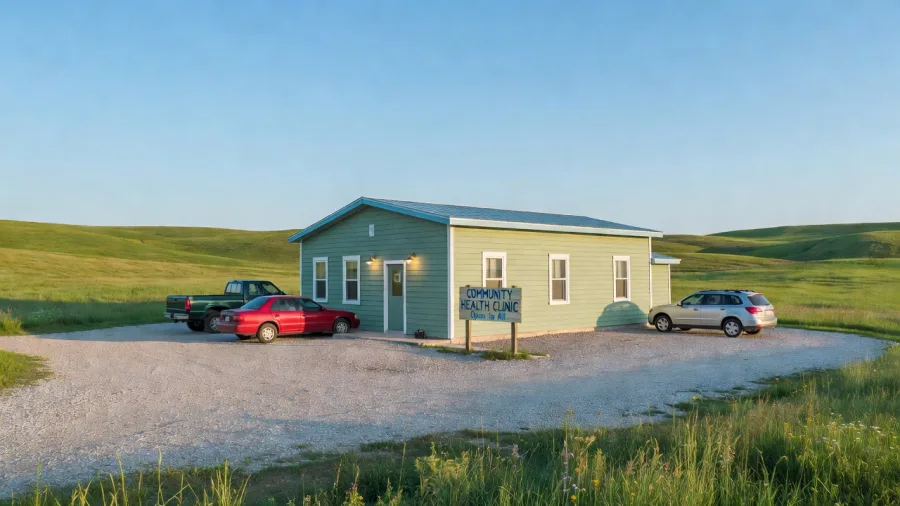
Community Health Centers are clinics funded by the federal government through the Health Resources and Services Administration (HRSA). They were created with one central mission: to make quality healthcare available to everyone, regardless of ability to pay or insurance status.
These are not charity clinics in the traditional sense. They are fully staffed medical facilities with licensed doctors, dentists, optometrists, and mental health professionals. They serve insured, uninsured, and underinsured patients side by side — and they are required by law to charge patients based on what they can actually afford.
There are over 1,400 Community Health Centers operating across the country, with more than 14,000 individual service delivery sites. Whether you live in a major city or a rural community, there is a good chance one is closer than you think.
Affordable Dental and Vision Care for Seniors Without Coverage: How the Sliding Scale Works
The feature that makes Community Health Centers so valuable for older adults on fixed incomes is the sliding-scale fee structure. Instead of charging a flat rate for services, CHCs calculate your fee based on your household income and family size.
This means two patients sitting in the same waiting room could pay very different amounts for the same cleaning or eye exam. Someone with a lower income may pay only a small portion of the standard cost, while someone with a higher income pays closer to the full rate. No one is turned away because they cannot pay.
You do not need to have Medicare, Medicaid, or any insurance at all to be seen. You simply provide information about your income, and the center determines what you owe. The actual amounts vary by location and are updated periodically, so it is always worth calling your nearest center to ask about current fees.
What Services Can You Get at a Community Health Center?
CHCs offer a broad range of services that go well beyond what many people expect. For older adults specifically, the most relevant include:
- Dental care: cleanings, fillings, extractions, dentures, and preventive care
- Vision care: eye exams, prescriptions for eyeglasses, and referrals for eye conditions
- Primary medical care: physicals, chronic disease management, prescriptions
- Mental health services: counseling, therapy, and psychiatric care
- Substance abuse treatment: evaluation and ongoing support
Not every center offers every service, and the availability of dental or vision care in particular can vary by location. It is always a good idea to call ahead and confirm what your nearest center provides before making the trip.
Who Qualifies to Use a Community Health Center?
This is the part that surprises most people: there are no strict eligibility requirements. Community Health Centers serve everyone. You do not have to be uninsured, low-income, or meet any specific criteria to walk through the door.
That said, the sliding-scale fee is most beneficial for those with limited income. If you have Medicare or another form of insurance, CHCs will bill your insurance first and then calculate any remaining balance you owe based on your income. So even if you have some coverage, you could still benefit from visiting a CHC for services your plan does not cover — like that routine dental cleaning or annual eye exam.
Do You Need to Bring Anything?
When you visit or call a Community Health Center, it helps to have:
- Proof of income (such as a recent tax return, Social Security award letter, or pay stub)
- Identification (a driver's license, state ID, or passport)
- Any insurance cards you do have, even if coverage is limited
Centers are accustomed to working with patients who have incomplete documentation and will do their best to accommodate you.
How to Find a Community Health Center Near You
The federal government maintains an official locator tool specifically for this purpose. You can search by zip code or city to find the nearest Community Health Center, see what services they offer, and get contact information to call ahead.
Visit findahealthcenter.hrsa.gov to search for a Community Health Center near you. The tool is free to use and requires no account or login.
You can also call 1-877-464-4772, the HRSA Health Center contact line, if you prefer to speak with someone directly or need help finding a location.
Do Not Let the Coverage Gap Stop You From Getting the Care You Need
Discovering that Medicare does not cover your dental cleaning or eye exam can feel discouraging, especially when you have worked hard and paid into the system for decades. But that gap does not have to mean going without care or taking on debt to afford it.
Community Health Centers were built for exactly this situation. They exist to ensure that cost and coverage status never stand between you and the care you need. If you have been putting off a dental appointment or skipping your eye exam because you are not sure how to pay for it, this is your next step.
Visit findahealthcenter.hrsa.gov today, enter your zip code, and find out what affordable dental and vision care for seniors without coverage looks like in your own community. One phone call to your nearest center can tell you what services are available and what you can expect to pay. The help is out there — you just need to know where to look.
Advertisement