Advertisement
When a spouse dies, the grief is immediate and overwhelming. But within days, something else quietly surfaces — the refrigerator is empty, the stove feels foreign, and the person who used to call out that dinner was ready is simply gone. For millions of Americans, losing a partner means losing the person who managed nearly every meal. If you or someone you love is navigating this painful transition, Meals on Wheels for recently widowed seniors after a spouse dies may offer more comfort and practical help than you might expect.
When Grief Makes Even Eating Feel Impossible
It is not unusual for newly widowed seniors to stop eating well — or eating at all. Grief suppresses appetite. Depression, which affects a large portion of people after spousal loss, can make even simple tasks feel exhausting. And if your husband or wife was the household cook, you may genuinely not know where to start.
Add to this the physical realities many older adults face — limited mobility, chronic illness, or simply not having driven in years — and the challenge of getting groceries or preparing a balanced meal can feel insurmountable. This is exactly the kind of moment Meals on Wheels was built for.
What Meals on Wheels Actually Provides
Meals on Wheels is a nationwide network of local programs that delivers nutritious meals directly to the homes of seniors who have difficulty shopping or cooking for themselves. Here is what most programs include:
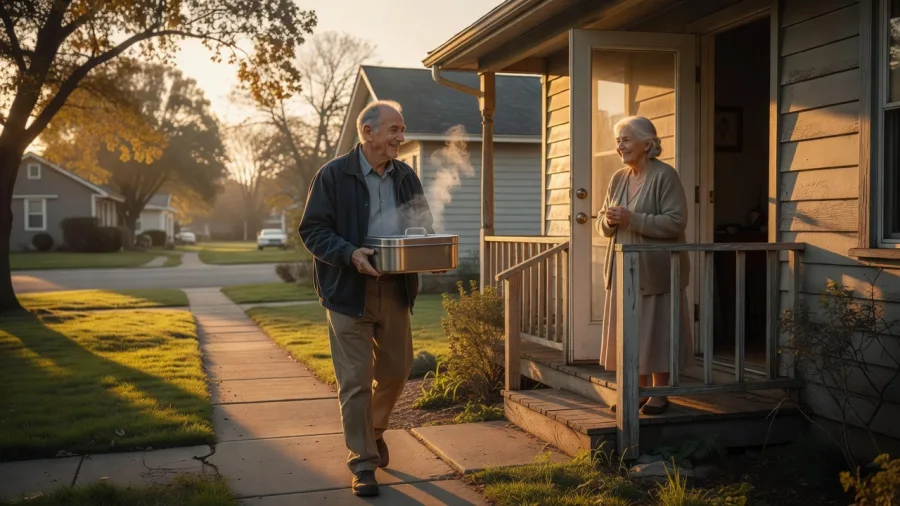
- Hot meals delivered to your door, usually once per day on weekdays, and sometimes on weekends
- Nutritionally balanced menus designed with older adults in mind, often accommodating dietary restrictions like low-sodium or diabetic-friendly options
- Little or no cost to recipients — many programs operate on a suggested donation basis and will never turn someone away for inability to pay
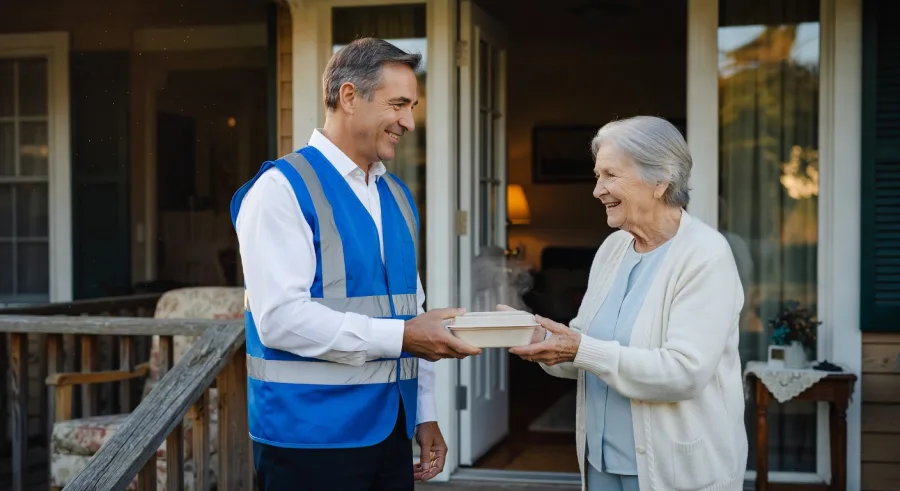
- A daily wellness check built into every delivery, meaning a real person sees you, speaks with you, and can alert someone if something seems wrong
That last point matters enormously in the weeks after a loss. When your world has gone quiet, a knock at the door — a friendly face who asks how you are doing — can be the most meaningful part of your day.
Meals on Wheels for Recently Widowed Seniors: How to Enroll Quickly
One of the most common misconceptions about Meals on Wheels is that there is a long, complicated application process. In reality, many local programs are designed to respond quickly to urgent situations — and bereavement absolutely qualifies.
Here is how to get started:
- Visit the Meals on Wheels America website and use the program locator to find your nearest local provider
- Call your local Area Agency on Aging (AAA) — you can find yours through the Eldercare Locator at eldercare.acl.gov or by calling 1-800-677-1116
- Ask about expedited enrollment — explain that you recently lost a spouse and are in immediate need. Many programs prioritize these cases
- Have basic information ready, such as your address, any dietary restrictions, and a general sense of your income level (though programs rarely require proof upfront)
Some programs have waiting lists due to high demand, but coordinators can often point you to interim resources, volunteer networks, or pantry services while you wait.
What to Say When You Call
It is okay to simply say: My spouse just passed away and I am not managing meals on my own right now. I need help as soon as possible. Program staff are trained to handle these conversations with compassion. You do not need to have everything figured out before you pick up the phone.
The Human Connection No One Talks About
Nutrition is only part of what Meals on Wheels delivers. For recently widowed seniors after a spouse dies, the daily visit from a volunteer or driver often becomes an unexpected anchor in a sea of isolation.
Volunteers are trained to notice changes — a senior who seems more confused than usual, one who does not answer the door, or one who mentions they have not spoken to anyone in days. These observations are quietly flagged and can trigger a welfare check or a call to a family member. In this way, Meals on Wheels functions as an informal safety net, one that many families say gave them enormous peace of mind during a vulnerable time.
Many program volunteers describe their routes as the highlight of their week — and recipients often say the same thing about the visit itself.
That brief moment of human contact — a few minutes of conversation, someone remembering your name and asking about your week — can interrupt the silence that grief creates. It is not therapy, but it is real, consistent human presence at a time when it matters most.
Meals on Wheels as a Bridge to Grief Support
Local Meals on Wheels coordinators and drivers are often well-connected within their communities. Many programs have formal or informal partnerships with grief support groups, senior centers, faith communities, and mental health services. Do not hesitate to ask your local program coordinator whether they can connect you with additional resources.
Some things you might ask about include:
- Local grief support groups for widowed seniors
- Companion volunteer programs that offer regular friendly visits or phone calls
- Transportation assistance to medical appointments or community events
- Benefits counseling to help you understand what financial support you may now qualify for
Widowhood often comes with a cascade of practical challenges — not just meals, but finances, healthcare decisions, and social isolation. Meals on Wheels is frequently the first door that opens to a wider network of support.
You Do Not Have to Navigate This Alone
Grief is hard enough without worrying about whether you ate today or whether anyone will notice if something goes wrong. Meals on Wheels for recently widowed seniors after a spouse dies is not just about food — it is about continuity, dignity, and the simple reassurance that someone is paying attention.
Whether you are reaching out for yourself or helping an aging parent who just lost their partner, taking this one step can make a real difference in both health and emotional well-being during one of life's most difficult chapters.
Your Next Step
Find your local Meals on Wheels program today by visiting mealsonwheelsamerica.org and using the zip code search tool. You can also call the Eldercare Locator at 1-800-677-1116 (Monday through Friday, 9am to 8pm Eastern) to be connected with your Area Agency on Aging, which can walk you through enrollment and other available services. Do not wait — help is closer than you think.
Advertisement