Advertisement
Is It Time for New Gutters? Know the Signs Before It Costs You
If you own a home, your gutters are quietly doing one of the most important jobs on the property — channeling rainwater away from your foundation, siding, and landscaping. But like everything else, gutters wear out over time. Knowing the signs gutters need replacing can mean the difference between a straightforward upgrade and a costly repair bill that runs into the thousands. This checklist is designed to help everyday homeowners — especially those who have been in their homes for decades — figure out when patching just isn't enough anymore.
Why Your Gutters Matter More Than You Think
Most people don't think much about their gutters until something goes wrong. But these narrow channels of aluminum, steel, or vinyl are protecting your entire home every time it rains. When gutters fail, water spills where it shouldn't — soaking into your foundation, seeping behind your siding, pooling around your landscaping, and finding its way into your basement.
The financial consequences can be serious. Foundation repairs caused by chronic water damage can cost $5,000 to $10,000 or more, depending on the severity and your location. Basement flooding, mold remediation, and rotted wood siding add even more to that figure. The good news is that new gutters for an average home typically run $1,000 to $3,000 — a much smaller investment that protects everything else.
Signs Your Gutters Need Replacing: A Room-by-Room Checklist
Walk around your home after the next rainfall — or just take a slow stroll on a dry day — and look for these warning signs. If you check off several of the items below, replacement is likely the smarter choice over another round of repairs.
On the Gutters Themselves
- Cracks, holes, or splits: Small cracks can be sealed temporarily, but if you see multiple cracks or large splits in the gutter channel, the material has deteriorated beyond simple patching.
- Rust or orange staining: Surface rust on steel gutters is a sign the protective coating is gone. Once rust sets in deeply, the gutter wall weakens and leaks are inevitable.
- Peeling paint or orange streaks on siding: This usually means water has been overflowing or leaking for a long time. The gutters may look intact but are likely failing at the seams.
- Sagging or pulling away from the house: Gutters that droop or separate from the fascia board can no longer direct water properly. This is often caused by the weight of standing water, debris buildup, or rotting fascia — and it typically signals the end of a gutter's useful life.
- Separated seams: Sectional gutters (those made of pieced-together sections) are prone to separating at the joints. If you see multiple gaps, you may want to consider switching to seamless gutters, which are formed in one continuous piece and are far less likely to leak.
Around Your Home's Exterior
- Water marks or mildew on siding: Streaks of mildew running down the side of your house below the gutters indicate chronic overflow or leaks.
- Flooded flower beds or eroded mulch: When gutters dump water over the side instead of directing it through downspouts, landscaping takes the hit. Repeated erosion is a clear sign your gutters are not doing their job.
- Pooling water near the foundation: This is one of the most serious warning signs. Water sitting near your foundation — especially after rain — is a red flag for potential foundation damage, basement moisture, and mold growth.
- Basement dampness or flooding after rain: If your basement gets wet after heavy rain and your gutters are old, there's a good chance the two problems are connected.
Age and Maintenance History
- Gutters older than 20 years: Most gutters have a lifespan of 20 to 30 years depending on the material and climate. If yours are approaching or past that range, replacement may be more cost-effective than repeated repairs.
- Constant clogging: If you find yourself cleaning your gutters several times a year and they still overflow, the slope may be off or the system is simply too worn to perform well. Adding gutter guards can help with maintenance, but they work best on a sound, properly installed system.
Repair vs. Replace: How to Decide
Not every gutter problem requires a full replacement. A single small crack, a loose bracket, or one clogged downspout are all reasonable candidates for repair. But when problems are widespread — multiple leaks, sagging in several places, gutters pulling from the fascia in more than one spot — replacement usually makes more financial sense in the long run.
A good rule of thumb: if you are calling for gutter repairs more than once every two or three years, or if your repair costs are adding up to more than half the price of a new system, it is time to replace.
What to Look for in a Replacement
When shopping for new gutters, keep a few things in mind:
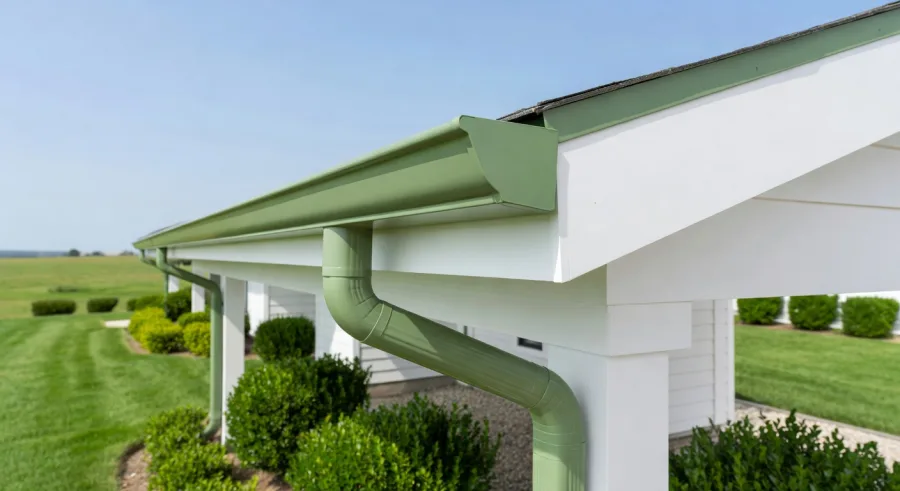
- Seamless gutters are a popular and durable upgrade. Because they are made from a single piece of material cut to fit your home, they have fewer joints where leaks can develop. They tend to last longer and look cleaner than sectional systems.
- Gutter guards can be added to keep leaves and debris from clogging your system. This is especially helpful if you have large trees near your home and want to reduce how often you need to clean them.
- Material matters: Aluminum is lightweight and rust-resistant, making it one of the most common choices. Copper and steel options also exist for homeowners looking for durability or a specific look.
- Proper installation is just as important as the material. Gutters need to be sloped correctly toward the downspouts, and downspouts should direct water well away from your foundation — at least three to six feet.
Signs Gutters Need Replacing: Don't Wait for the Damage to Appear
The tricky thing about gutter failure is that the damage often happens slowly and out of sight. By the time you notice a wet basement or cracks in your foundation, the problem has already been building for months or years. That's why it pays to check your gutters at least twice a year — ideally in the spring and fall — and after any major storm.
If you have spotted several of the signs gutters need replacing described in this checklist, acting sooner rather than later is the smart financial move. A relatively modest investment in new gutters now can protect you from repair bills that are five to ten times higher down the road.
Your Next Step
Ready to take action? Start by getting two or three quotes from licensed gutter contractors in your area. Many offer free estimates, and a professional can assess whether your fascia boards are in good shape before installation begins. Some utility companies and local programs also offer home improvement incentives for older homeowners — check with your state's housing agency or local Area Agency on Aging to see what might be available in your area. Taking care of your home is one of the best investments you can make, and your gutters are a great place to start.
Advertisement