Advertisement
If you have recently received a new disability diagnosis — or started receiving disability-related income — and you are already enrolled in SNAP benefits, there is something important you should know: your SNAP benefits new disability diagnosis senior situation may entitle you to significantly higher monthly food assistance, and you do not have to wait until your next renewal to get it. Understanding how a change in health status affects your eligibility can mean the difference between barely getting by and having enough food on the table every single month.
Why a Disability Diagnosis Changes Everything for SNAP
SNAP has two categories of household members that receive special treatment under federal rules: the elderly (age 60 and older) and people with disabilities. If you were previously enrolled in SNAP only as a lower-income adult under 60, acquiring a qualifying disability status opens up a set of financial deductions that were simply off the table before.
These deductions reduce your countable net income, which is the number the government uses to calculate your monthly benefit amount. A lower net income means a higher SNAP benefit — sometimes dramatically so. For many seniors, this change can increase monthly food assistance by hundreds of dollars.
Qualifying disabilities for SNAP purposes typically include receiving SSI, Social Security Disability Insurance (SSDI), or a state-administered disability payment, as well as certain veterans disability benefits and other federally recognized conditions. If your doctor has recently certified a disabling condition and you have begun or expect to begin receiving disability income, you likely qualify for these expanded deductions.
The Three Big Deductions Unlocked by Disabled Status
1. The Medical Expense Deduction
This is often the most valuable benefit that comes with disabled or elderly status in SNAP. Households with at least one elderly or disabled member can deduct qualifying out-of-pocket medical expenses that exceed a modest monthly threshold set by federal rules. Expenses that may count include:
- Prescription drug copays and costs
- Medicare and supplemental insurance premiums
- Doctor visit copays and medical transportation
- Home health aide costs and in-home care services
- Dental and vision expenses
- Medical equipment such as walkers, wheelchairs, and hearing aids
For a senior managing a new chronic condition with multiple prescriptions, specialist visits, and therapy appointments, these costs can add up quickly. Every dollar above the federal threshold that you spend on qualifying medical care can reduce your countable income — which raises your SNAP benefit.
2. The Shelter Cost Protection (Excess Shelter Deduction)
SNAP allows households to deduct a portion of housing costs — rent, mortgage, utilities, and related expenses — from their countable income. For most households, there is a cap on how much of this shelter deduction they can claim. Households with an elderly or disabled member are exempt from that cap. This means that if you are paying a large share of your income toward housing and utilities, your full shelter burden counts against your net income with no ceiling, potentially qualifying you for a much higher benefit amount.
3. Categorical Eligibility in Some States
Many states have adopted what is called broad-based categorical eligibility, which can simplify or expand SNAP access for people receiving certain disability-related benefits like SSI. In some states, receiving SSI may make you automatically eligible for SNAP without a separate income or asset test. Rules vary significantly by state, so it is worth asking your caseworker directly whether your new disability income triggers automatic eligibility or expanded thresholds in your state.
How to Trigger a Mid-Certification Recalculation
Here is the good news: you do not have to wait until your SNAP certification period ends to claim these new deductions. A significant change in your household circumstances — including acquiring a disability — is considered a reportable change that obligates your state SNAP office to recalculate your benefit right away.
To trigger this recalculation, you need to report the change to your caseworker as soon as possible. Most states require you to report changes within 10 to 30 days of the change occurring. Acting quickly means your higher benefit can kick in sooner.
What Documentation to Bring
When you contact your SNAP office or caseworker, bring as much of the following documentation as you can. Having it ready will speed up the process considerably:
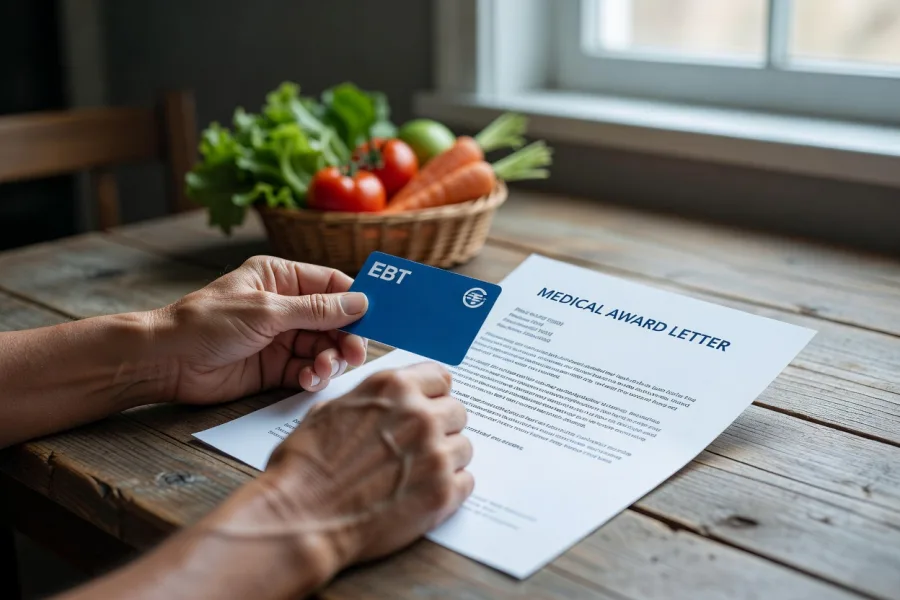
- Proof of disability status: An award letter from the Social Security Administration for SSI or SSDI, a letter from your doctor certifying a disabling condition, or a veterans disability rating letter
- Medical expense records: Pharmacy receipts, insurance premium statements, Medicare Part B or D premium notices, bills from doctors or therapists, and receipts for medical equipment
- Housing and utility costs: Current lease or mortgage statement, utility bills, and any low-income energy assistance program documentation
- Income documentation: Any new benefit award letters showing your current disability income amount
Even if you do not have every document on this list, do not wait. Contact your caseworker now and explain that you have experienced a disability-related change. You can submit additional documentation as it becomes available.
What Happens After You Report the Change
Once your caseworker receives your report and documentation, they are required to process a mid-certification review and recalculate your benefit. If your new benefit amount is higher — which it very likely will be — the increase typically takes effect within 30 days, and in some cases your state may issue a retroactive supplement for benefits you should have been receiving.
If you believe your new benefit amount is still incorrect after the recalculation, you have the right to request a fair hearing through your state SNAP office. This is a formal review process and is free to use.
A new SNAP benefits calculation after a disability diagnosis can mean hundreds of dollars more in monthly food assistance for seniors — money that makes a real difference when managing new health costs at the same time.
Taking Action on Your SNAP Benefits New Disability Diagnosis as a Senior
Navigating a new diagnosis is already stressful. The last thing you should have to worry about is whether you are leaving food assistance money on the table. But the rules are on your side: federal SNAP policy is specifically designed to give elderly and disabled households more help, not less.
If you are a senior who has recently been diagnosed with a disabling condition, started receiving SSI or SSDI, or begun paying significant out-of-pocket medical costs, do not wait for your renewal. Report the change, bring your documentation, and ask your caseworker to recalculate your benefit using the elderly and disabled deductions you now qualify for.
Your Next Step
Visit the official SNAP eligibility and contact page at benefits.gov or go directly to your state SNAP agency website to find your local office contact information. You can also call the USDA SNAP hotline or your state benefits line to report your change by phone. Many states also allow you to report changes and upload documents through an online benefits portal. Start today — your updated benefits could arrive within the month.
Advertisement