Advertisement
How to Choose a Solar Installer and Avoid Scams — What Every Retiree Should Know First
Solar panels can be a smart investment for homeowners on fixed incomes. The federal Investment Tax Credit covers 30% of installation costs, monthly electric bills can drop dramatically, and in many states you can even earn money by selling excess power back to the grid. But before any of those savings reach your wallet, you have to hire someone to put panels on your roof — and that is where things can go seriously wrong.
Retirees are among the most frequently targeted groups for solar scams and high-pressure sales tactics. Understanding how to choose a solar installer and avoid scams is not just useful advice — for many older Americans, it is the difference between a decade of savings and a financial nightmare. This guide walks you through every step you should take before signing a single document.
Why Older Homeowners Are Targeted by Dishonest Solar Salespeople
Solar is a booming industry, and most installers are legitimate businesses doing honest work. But rapid growth also attracts bad actors. Seniors who own their homes outright, live in sunbelt states, and are actively looking for ways to cut expenses are an attractive target for unscrupulous contractors.
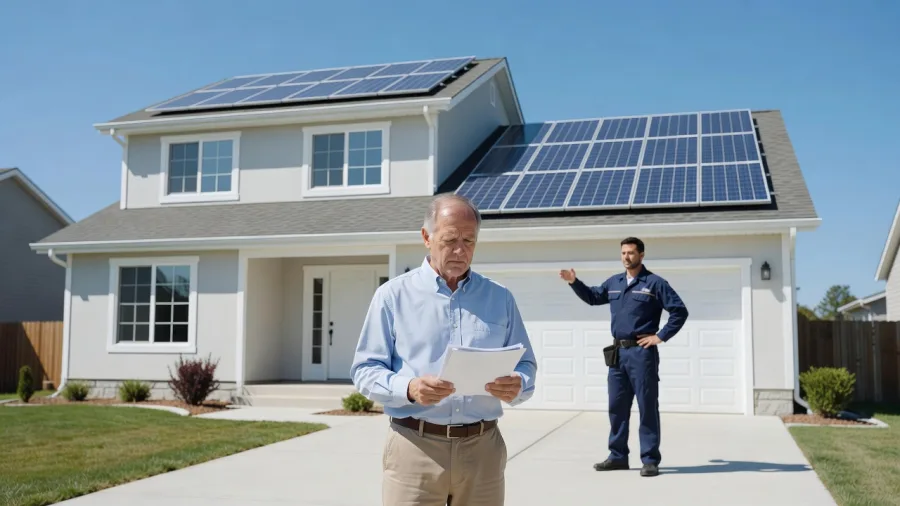
Door-to-door solar sales are legal, but they are also one of the most common settings for aggressive or deceptive pitches. A salesperson may show up unannounced, claim a limited-time government program is expiring, or pressure you to sign a financing agreement on the spot before you have had a chance to think it over.
Important: No legitimate government solar program requires you to sign same-day to receive a benefit. If anyone tells you that you must decide immediately, treat it as a warning sign and ask them to leave.
Common Tactics to Watch For
- Fake urgency: Claims that a rebate or tax credit expires in days — designed to stop you from doing research.
- Misleading savings promises: Guarantees of specific monthly savings without reviewing your actual utility bills or roof conditions.
- Confusing contract language: Solar leases and power purchase agreements (PPAs) can lock you into 20-year contracts with escalating payments. Make sure you understand what you are signing.
- Unlicensed subcontracting: Some companies sell the job and then hand it to an unlicensed crew you never vetted.
- Pressure to skip permits: Any installer who suggests skipping the local permitting process is exposing you to serious legal and insurance risk.
How to Vet a Solar Installer Before You Commit
Taking a few hours to research a contractor before signing can protect you from years of problems. Here is a practical checklist to follow every time.
Check Licensing Through Your State Contractor Board
Every state requires contractors to hold a license for electrical and roofing work — the two trades involved in most solar installations. Your state contractor licensing board maintains a public database where you can look up any company by name or license number and confirm that the license is active and in good standing. Search for your state name plus the phrase contractor license lookup to find the right website.
Ask the installer for their license number before your first meeting and verify it yourself. Do not rely on a license number printed on a business card or website — look it up directly through the state database.
Confirm Insurance Coverage
A legitimate solar contractor should carry both general liability insurance and workers compensation coverage. Ask for a certificate of insurance and call the insurance company directly to confirm it is current. If a worker is injured on your roof and the contractor has no workers comp, you could face a lawsuit.
Look Up Complaints and Reviews
Check the contractor with your state Attorney General consumer protection office, the Better Business Bureau, and the Federal Trade Commission complaint database. Also search the company name alongside the word complaint or lawsuit. A pattern of unresolved complaints is a serious red flag.
Get at Least Three Written Quotes
Prices for solar installation vary significantly depending on your roof, system size, and local market. Getting multiple quotes helps you spot bids that are either suspiciously low or padded with unnecessary equipment. Ask each contractor to explain exactly what equipment they are installing, who manufactures it, and how long delivery and installation will take.
Understanding Warranties — Especially If the Company Closes
One of the least-discussed risks in residential solar is what happens to your warranty if the installer goes out of business. This is not a rare scenario. Many smaller solar companies have closed in recent years, leaving homeowners with no one to call when panels underperform or roof penetrations start leaking.
When reviewing any warranty, ask these specific questions:
- Is the equipment warranty backed by the manufacturer directly, or only by the installer?
- Is there a workmanship warranty separate from the equipment warranty, and who honors it if the installer closes?
- Does the financing agreement — if you are using a solar loan, lease, or PPA — include any warranty protections?
Manufacturer warranties on quality solar panels often run 25 years or more, and those warranties follow the equipment regardless of who installed it. Workmanship warranties, however, are typically only as strong as the company that issued them. Choosing an installer with a long track record and strong financials reduces — but does not eliminate — this risk.
Your Rights When Approached by a Door-to-Door Solar Salesperson
Federal law gives you a three-day right to cancel any contract signed in your home with a door-to-door salesperson. This is called the FTC Cooling-Off Rule. If you signed something during an in-home visit and had second thoughts, you have until midnight of the third business day after the sale to cancel without penalty. The salesperson is legally required to tell you about this right and give you a cancellation form.
Many states extend this window further or add additional protections for seniors. Contact your state Attorney General office to learn what rules apply in your state.
How to Choose a Solar Installer and Avoid Scams: A Final Checklist
- Never sign on the day of a first visit — take at least a week to do your own research.
- Verify the contractor license number directly through your state board.
- Request and verify a current certificate of insurance.
- Get three written quotes and compare them in detail.
- Read the full contract before signing, including any financing agreement.
- Ask specifically who honors the workmanship warranty if the company closes.
- Report any suspicious behavior to the FTC at ReportFraud.ftc.gov and your state Attorney General.
Take the Next Step With Confidence
Solar energy can genuinely reduce your monthly expenses and increase your home value — but only when you hire the right installer on the right terms. The good news is that the tools to protect yourself are free, publicly available, and easy to use. Your state contractor board, your state Attorney General consumer protection office, and the FTC complaint portal are all designed to help you make informed decisions.
Start by visiting your state contractor board website today to look up any installer you are considering. If you have already received a quote or signed something you are uncertain about, contact your state Attorney General consumer protection hotline — most states offer free guidance at no cost to you.
Advertisement