Advertisement
Your Homeowners Policy Has a Blind Spot — and It May Be Parked in Your Driveway
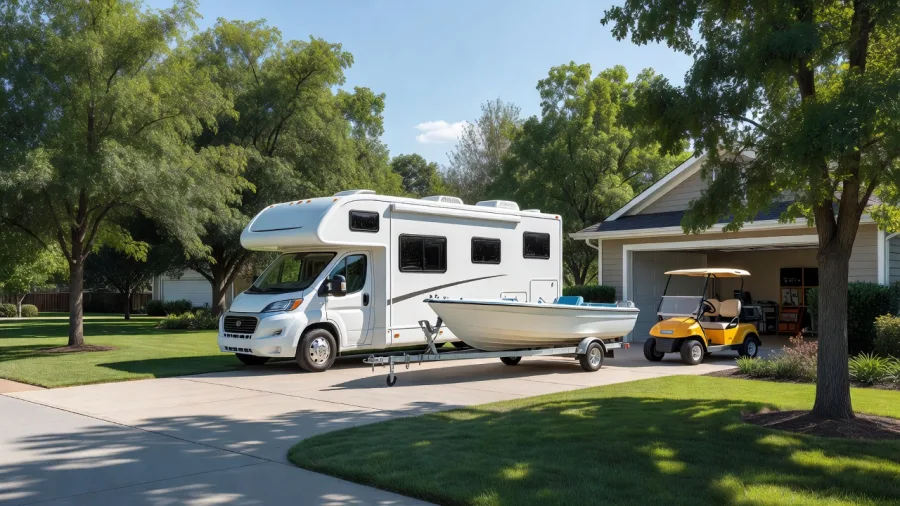
Retirement is the perfect time to enjoy the things you worked your whole life for — a boat on the lake, an RV for cross-country trips, a golf cart for cruising the neighborhood, or an ATV for exploring the back trails. But if you have home insurance coverage for recreational vehicles, boats, RV, or seniors-owned specialty vehicles on your radar, there is something critically important you need to understand: storing or using these vehicles on your property can create serious gaps in your homeowners insurance protection that most people never discover until it is too late.
This guide breaks down exactly where those gaps exist, what coverage options are available to close them, and how to do it without overpaying.
What Your Standard Homeowners Policy Actually Covers
A standard homeowners insurance policy is designed to protect your house and your personal belongings inside it. It also includes liability coverage if someone is injured on your property. Sounds comprehensive, right? The problem is that most policies contain very specific exclusions when it comes to motorized vehicles — and that category is broader than most homeowners realize.
Here is what is typically not fully covered under a standard homeowners policy:
- Boats and watercraft: Most policies offer very limited coverage — often only for small boats under a certain horsepower or value. A larger boat stored in your yard or on a trailer is typically excluded from both property damage and liability coverage.
- Recreational vehicles (RVs and motorhomes): An RV parked in your driveway is almost never covered under a homeowners policy. If it is damaged by a storm, theft, or fire, you may receive nothing.
- Golf carts: Golf carts are increasingly common in retirement communities, but unless you have added a specific endorsement, your homeowners policy likely does not cover accidents, injuries, or damage involving one.
- ATVs and off-road vehicles: These are almost universally excluded from homeowners liability coverage, even if the incident happens entirely on your own property.
Many homeowners assume that because a vehicle is parked on their property, it is covered under their home policy. That assumption can cost thousands of dollars — or more — when a claim is denied.
The Liability Risk Nobody Talks About
Property damage to your own vehicle is one problem. But the bigger financial risk for many seniors is liability exposure. Imagine a grandchild is injured riding your golf cart. A neighbor is hurt when your boat falls off its trailer. A visitor trips over your ATV in the garage. In each of these scenarios, your standard homeowners liability coverage may not apply at all because a motorized vehicle was involved.
Personal liability judgments can reach into the hundreds of thousands of dollars. If your homeowners policy denies the claim — which it is contractually entitled to do under most standard exclusions — that financial burden falls entirely on you.
Home Insurance Coverage for Recreational Vehicles: The Right Solutions
The good news is that closing these gaps is straightforward once you know what to look for. Here are the main options available to seniors who own recreational vehicles, boats, or specialty vehicles.
Standalone Boat Insurance
A dedicated boat insurance policy covers your watercraft for physical damage, theft, and liability — both on the water and while stored at your home or trailered on the road. Rates vary based on the size, age, and value of the boat, as well as where you live. Many insurers offer discounts for completed boating safety courses, which is worth noting if you are shopping around.
RV and Motorhome Insurance
Standalone RV insurance policies are specifically designed for motorhomes, travel trailers, and fifth-wheel campers. They typically cover the vehicle itself, your personal belongings inside, and liability while you are using or storing the RV. If you use your RV as a part-time or full-time residence, make sure your policy reflects that — standard auto-style RV policies may not cover it adequately.
Golf Cart Endorsements and Standalone Policies
Many homeowners insurers will add a golf cart endorsement to your existing policy for a relatively modest additional premium. This extends liability and property coverage to the cart while it is on your property or within a designated community. If you use your golf cart on public roads — which is legal in many retirement communities and municipalities — you will likely need a standalone golf cart policy instead.
ATV and Off-Road Vehicle Insurance
Standalone ATV policies cover physical damage to the vehicle and liability for injuries or property damage caused during use. Even if you only ride on your own land, liability coverage is important — medical costs and legal fees add up quickly regardless of where an accident occurs.
How to Avoid Overpaying While Closing Coverage Gaps
Getting the right coverage does not mean paying for more than you need. Here are practical steps to protect yourself without inflating your insurance budget:
- Bundle where possible: Many insurers offer discounts when you combine your homeowners, auto, boat, or RV policies with the same carrier. Bundling home and auto alone can save 10% to 25%, and adding additional policies may increase that discount further.
- Review your homeowners policy annually: Ask your insurer or agent specifically about recreational vehicle exclusions. Knowing exactly what is excluded helps you shop for only the coverage you are actually missing.
- Shop around for specialty policies: Rates for boat, RV, and ATV insurance vary significantly between carriers. Getting multiple quotes takes a bit of time but can save a meaningful amount each year.
- Ask about claims-free discounts: If you have not filed claims recently, many specialty insurers will reward that history with lower premiums — just as with standard homeowners coverage.
- Adjust deductibles thoughtfully: Raising your deductible on a boat or RV policy can reduce your annual premium. Just make sure the deductible is an amount you could realistically cover out of pocket if needed.
A Simple Checklist Before Your Next Policy Renewal
Use this quick checklist to identify any gaps in your current home insurance coverage for recreational vehicles, boats, RV, or other senior-owned specialty vehicles:
- Do you own a boat, personal watercraft, or sailboat stored at home or on a trailer?
- Do you own an RV, motorhome, or travel trailer — even one that sits mostly parked?
- Do you own or regularly use a golf cart, neighborhood electric vehicle, or similar cart?
- Do you own an ATV, dirt bike, or other off-road vehicle?
If you answered yes to any of these, your next call should be to your insurance agent — or to a comparison shopping platform where you can review multiple options at once.
Take Action Before a Claim Forces the Conversation
Most people do not discover their coverage gaps until they file a claim and get a denial letter. By then, the financial damage is already done. The encouraging news is that the right coverage for your boats, RVs, golf carts, and ATVs is readily available, often affordable, and straightforward to put in place.
Start by calling your current homeowners insurer and asking directly: which recreational vehicles and motorized equipment stored on my property are excluded from my policy? Then use that answer to guide your next steps. Visit a reputable insurance comparison site, speak with an independent insurance agent who works with multiple carriers, or search directly for specialty insurers who focus on boat, RV, or recreational vehicle coverage. Taking an hour to review your coverage now could save you from a very costly surprise later.
Advertisement