Advertisement
Is Your Older Home Quietly Losing Its Insurability?
If you have lived in your home for decades, you already know its quirks — the creak in the hallway, the faucet that takes a moment to warm up, the breaker panel that trips when too many appliances run at once. What you may not realize is that your insurance company is paying close attention to those same details. Across the country, Americans 55 and older are receiving unexpected non-renewal notices — not because they filed claims or moved to a flood zone, but because aging infrastructure like old roofs, galvanized pipes, and outdated electrical panels has quietly crossed the line of what insurers are willing to cover. Understanding home insurance non-renewal due to old roof, plumbing, and wiring issues is now one of the most important financial topics for seniors living in older homes.
Why Insurers Are Watching Your Home's Age More Closely Than Ever
Insurance companies use actuarial data to predict risk. When your home's systems reach the end of their expected lifespan, the numbers stop working in your favor. A roof that is 25 or 30 years old, regardless of how it looks from the street, represents a statistical liability to an underwriter. The same is true for galvanized steel plumbing installed before the 1970s, knob-and-tube or aluminum wiring from earlier decades, and electrical panels with known safety issues such as certain Federal Pacific or Zinsco models.
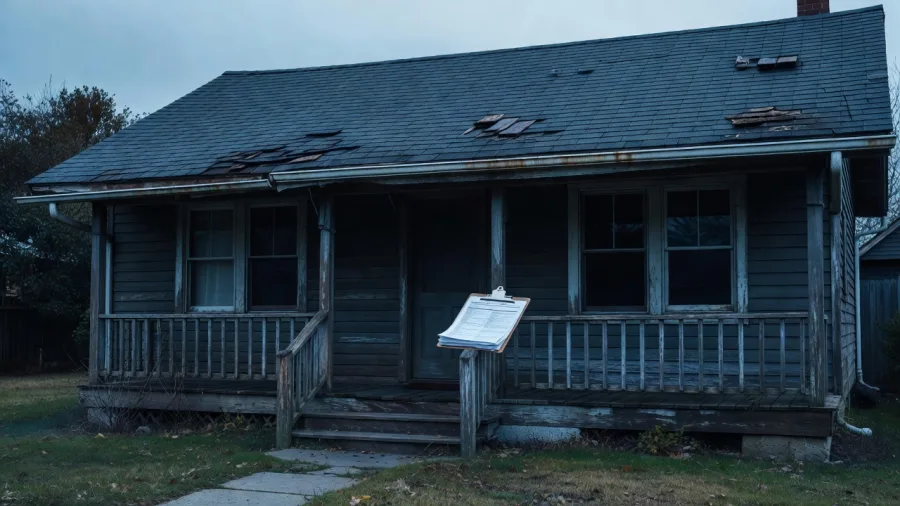
Insurers may require an inspection before renewing your policy. If that inspection reveals aging systems past their expected service life, you could receive one of three outcomes: a non-renewal notice, a renewal with specific exclusions that leave critical areas unprotected, or a sharp premium increase. Many homeowners are caught completely off guard because nothing has broken, leaked, or burned — the systems are simply old.
The Systems That Trigger the Most Non-Renewal Notices
- Roof age and condition: Most insurers consider a roof over 20 years old to be high risk. After 25 to 30 years, some carriers will refuse to renew or will only offer actual cash value coverage instead of replacement cost — meaning a payout far below what a new roof would cost.
- Galvanized plumbing: Galvanized steel pipes were standard in homes built before the 1960s and 1970s. They corrode from the inside out, restricting water flow and increasing leak risk. Many insurers flag this material during inspections.
- Knob-and-tube or aluminum wiring: Knob-and-tube wiring, common in homes built before the 1950s, lacks a ground wire and was not designed for modern electrical loads. Aluminum wiring from the 1960s and 1970s carries its own fire risk. Both are increasingly difficult to insure.
- Outdated electrical panels: Certain panel brands have been associated with elevated fire risk. Even panels that function normally may cause insurers to hesitate or decline coverage.
- Oil tanks and older HVAC systems: Underground oil tanks and aging heating systems can also trigger concerns, particularly if they are past their expected service life.
What to Do Before You Receive a Non-Renewal Notice
The worst time to discover an insurability problem is after your policy has already lapsed. Here are practical steps you can take right now to stay ahead of the issue.
Schedule a Pre-Inspection on Your Own Terms
Before your insurer sends someone out, consider hiring a licensed home inspector to walk through your property. This gives you a clear picture of what may be flagged and time to address issues before your renewal date. Ask specifically about roof age and condition, plumbing materials, electrical system age and panel brand, and any visible signs of deferred maintenance.
Start Comparison Shopping Before You Are Dropped
Shopping around while you still have active coverage gives you far more options than scrambling after a non-renewal. Research consistently shows that comparison shopping can save 20% to 30% or more on premiums, and some regional or specialty carriers are more willing than national companies to insure older homes with aging systems. Independent insurance agents who work with multiple carriers can be especially helpful in this search.
Prioritize Upgrades That Restore Insurability
Some home improvements do more than lower your premium — they restore your ability to get coverage at all. Replacing an aging roof, upgrading to copper or PEX plumbing, and modernizing your electrical panel are investments that directly address the systems insurers scrutinize most. Many carriers will reward these upgrades with lower rates immediately. Some states also offer property tax relief or low-interest loan programs to help seniors fund necessary repairs, so check with your local Area Agency on Aging or state housing authority for available assistance.
Ask About Discounts You May Already Qualify For
If your home's systems are in reasonable shape, do not leave money on the table. Bundling your home and auto insurance with the same carrier typically saves 10% to 25% on premiums. Installing a monitored security system, adding smoke detectors, or fitting storm shutters can also reduce your rate. Many carriers offer claims-free discounts for homeowners who have not filed a claim in several years — a category many long-term homeowners fall into without realizing there is a reward for it.
Review Your Coverage Annually — Especially After Repairs
Once you make improvements, tell your insurer. A new roof, updated plumbing, or a panel replacement changes your risk profile. Annual policy reviews ensure your coverage reflects the current state of your home — protecting you from being over-insured on things you no longer need and under-insured on things that matter most. Raising your deductible, for example from $1,000 to $2,500, can also meaningfully reduce your annual premium if you have emergency savings to cover the gap.
If You Have Already Received a Non-Renewal Notice
Do not panic, but act quickly. You typically have 30 to 60 days before your policy expires. Contact your state's Department of Insurance — every state has one — to understand your rights and find out whether a FAIR Plan (Fair Access to Insurance Requirements) is available in your area. FAIR Plans are state-backed programs designed specifically for homeowners who cannot find coverage in the standard market. Coverage may be more limited and more expensive, but it keeps you legally protected and buying time to address the underlying issues.
Losing your homeowners insurance does not just mean losing financial protection — it can trigger a mortgage lender requirement that they force-place coverage on your behalf, often at a significantly higher cost and with far less protection.
Your Next Step: Do Not Wait for the Notice to Arrive
If your home is more than 20 years old, now is the time to act. Start by pulling out your current policy and checking your renewal date, then look at the declarations page for any existing exclusions you may have overlooked. Contact an independent insurance agent who specializes in older homes, request a home inspection, and reach out to your state's Department of Insurance website to find consumer resources specific to your state. Seniors facing home insurance non-renewal due to old roof, plumbing, or wiring concerns have more options than they realize — but only when they move early. Visit your state Department of Insurance website today to find licensed agents, file a complaint if you believe a non-renewal was improper, or locate your state's FAIR Plan provider.
Advertisement