Advertisement
Working From Home Is More Than a Convenience — It Can Be a Game Changer
If you are an adult 55 or older living with a disability, finding steady work can feel like an uphill climb. Physical barriers, transportation challenges, and workplace environments that were not designed with your needs in mind can all stand between you and a paycheck. But here is something many people do not know: vocational rehabilitation remote work from home jobs for older adults are within reach — and a free government program may be able to fund everything you need to get there.
Vocational Rehabilitation, commonly called VR, is a state-run program available in all 50 states. It exists specifically to help people with disabilities enter or return to the workforce. And in today's job market — where remote and hybrid positions are more plentiful than ever — VR can be a powerful launching pad for building a home-based career on your own terms.
What Is Vocational Rehabilitation and Who Qualifies?
VR programs are funded through a partnership between the federal government and individual states. They are administered locally, which means services and investment levels vary depending on where you live. What stays consistent is the core mission: helping people whose disability creates a barrier to employment find and keep meaningful work.
To qualify, you generally need to meet two basic conditions:
- You have a documented physical, sensory, cognitive, or mental health disability.
- That disability makes it harder for you to find, perform, or keep a job.
Age is not a barrier to qualifying. Adults in their 50s, 60s, and beyond regularly participate in VR programs and use the services to transition into new careers or re-enter the workforce after a health-related absence.
How VR Can Specifically Support Your Remote Work Goals
This is where things get especially useful for older adults who want to work from home. VR counselors are trained to look at your disability, your goals, and your circumstances — and then build a plan that removes the barriers standing in your way. When your goal is remote or hybrid employment, that plan can include some very practical, high-value support.
Technology and Assistive Devices
Many remote jobs require a reliable computer, high-speed internet access, and software tools. If your disability affects your vision, hearing, mobility, or cognition, you may also need specialized equipment. VR programs can fund:
- Laptop or desktop computers suited for your job goals
- Screen readers and voice recognition software
- Amplified phone headsets or captioning tools
- Ergonomic keyboards, mice, and other adaptive input devices
For many participants, the technology package alone represents thousands of dollars in support they would not otherwise have access to.
Home Office and Ergonomic Equipment
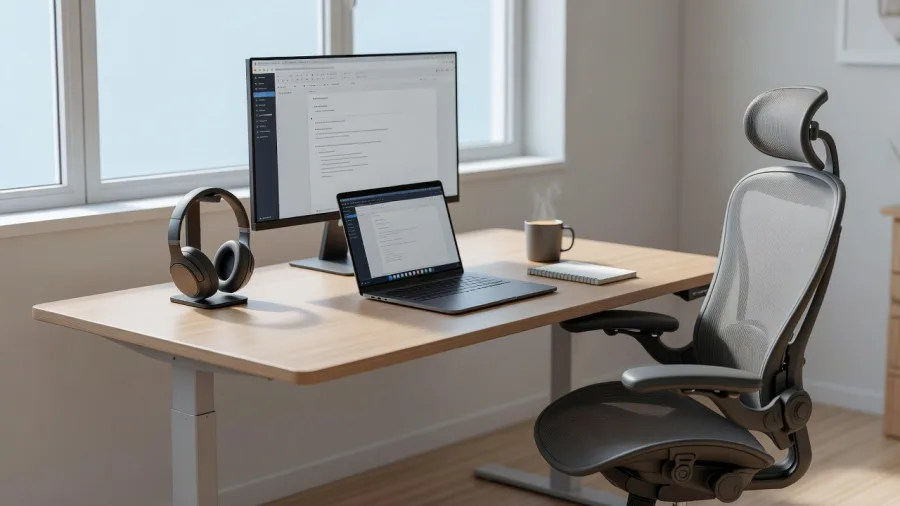
One of the most overlooked benefits of VR for remote workers is the ability to fund a functional, accessible home workspace. If your disability involves chronic pain, limited mobility, or fatigue, working from a standard desk setup may not be sustainable. VR can sometimes help cover:
- Ergonomic chairs or sit-stand desks
- Specialized lighting for low-vision conditions
- Other adaptive furniture or workspace modifications
Think of it this way: telecommuting is not just a scheduling preference for many people with disabilities — it is a legitimate accommodation strategy. VR programs recognize this, and a good counselor will help you frame your home office setup as a direct response to your disability-related needs.
Job Training and Skills Development
Maybe you have not worked in several years, or the field you are targeting requires skills you have not had a chance to build yet. VR can fund job training programs, vocational certificates, and even college coursework when those credentials are tied to your employment goal. Popular remote-friendly fields that older adults often pursue through VR include customer service, medical billing and coding, data entry, bookkeeping, and administrative support.
Career Counseling and Job Placement
Your VR counselor does not just hand you a list of resources and send you on your way. They work with you through an Individualized Plan for Employment — a written roadmap tailored to your specific goal. That support often includes resume writing, interview coaching, and connections to employers who are actively hiring for remote positions. Some VR programs have dedicated job placement staff who specialize in matching clients with work-from-home opportunities.
Why Remote Work Makes So Much Sense as a Disability Strategy
For adults 55 and older managing a disability, the traditional office environment can present real challenges: long commutes, inaccessible buildings, rigid schedules, physical demands, and social dynamics that may not accommodate your needs. Remote work eliminates many of these barriers by design.
When you work from home, you control your environment. You can set up your workspace to support your body. You can take breaks when you need them. You avoid commuting stress and transportation costs. And you have far more flexibility to manage medical appointments, medications, and energy levels without sacrificing your job performance.
Remote work is not a lesser option for people with disabilities — it is often the smarter option. VR programs are increasingly recognizing this, and counselors across the country are helping participants pursue home-based careers as a deliberate and well-supported strategy.
How Much Can VR Invest in You?
The honest answer is: it depends on your state and your individual plan. VR programs have funded career development plans worth $10,000 or more per person in many cases, covering a combination of training, equipment, and services. Some participants have received even greater support when their goals require advanced education or significant assistive technology. Your counselor will work with you to determine what is reasonable and justified based on your situation.
How to Get Started With Vocational Rehabilitation for Remote Work Jobs
The process is more straightforward than most people expect. Here is a simple path forward:
- Find your state VR agency. Every state has one, and many have multiple local offices. A quick search for your state name plus the words vocational rehabilitation will point you in the right direction.
- Apply for services. Most state VR agencies allow you to apply online, by phone, or in person. The application asks basic questions about your disability and your work goals.
- Attend an intake meeting. A VR counselor will meet with you to review your disability documentation, discuss your employment goals, and determine whether you are eligible.
- Build your plan. Once approved, you and your counselor create an Individualized Plan for Employment that spells out exactly what services you will receive and what you are working toward.
Take the First Step Today
If you are an older adult with a disability who wants to work — especially from home — vocational rehabilitation remote work from home jobs for older adults is not just a concept. It is a real, funded pathway that thousands of Americans use every year. The technology, training, and support you need to build a home-based career may already be available to you at no cost.
Visit rsa.ed.gov to find contact information for your state Vocational Rehabilitation agency, or search online for your state VR office to apply directly. You can also call the Rehabilitation Services Administration information line to get pointed in the right direction. Do not wait — VR programs sometimes have waitlists, and the sooner you apply, the sooner your plan can begin.
Advertisement