Advertisement
Transportation Should Never Be the Reason You Stop Working
For many Americans 55 and older living with a disability, the biggest obstacle to returning to work has nothing to do with skills or motivation. It is simply getting there. Whether a health condition has made driving difficult, a mobility impairment requires a specially equipped vehicle, or public transit just does not reach your neighborhood, transportation barriers are one of the most common and least talked-about reasons older adults with disabilities step away from the workforce entirely.
What most people do not realize is that vocational rehabilitation transportation assistance for older adults with disabilities exists in every state and can cover far more than a bus pass. State Vocational Rehabilitation agencies, commonly called VR, are designed to remove exactly these kinds of barriers so that disability and circumstance never become permanent roadblocks to employment. If getting to work feels impossible right now, keep reading. There is a real pathway forward.
What Is Vocational Rehabilitation and Who Qualifies?
Vocational Rehabilitation is a federally funded, state-run program that provides free services to people with physical, sensory, cognitive, or mental health disabilities who want to work. The program operates in all 50 states plus Washington D.C. and U.S. territories, though specific services and investment levels vary by state and by individual need.
To qualify, you generally need to meet two basic criteria:
- You have a documented physical or mental disability.
- That disability creates a significant barrier to getting or keeping a job.
Age is not a disqualifying factor. Adults 55 and older are absolutely eligible, and many VR counselors are experienced in working with people who are re-entering the workforce after a health event, injury, or gradual functional decline. If transportation has become a barrier because of your disability, that barrier counts when determining what services you need.
How Vocational Rehabilitation Transportation Assistance Helps Older Adults With Disabilities
Once you are accepted into a VR program, a counselor works with you to develop an Individualized Plan for Employment, or IPE. This is a personalized road map that outlines the specific services and supports you need to reach your employment goal. Transportation is frequently part of that plan. Here are the most common ways VR can help:
Vehicle Modifications
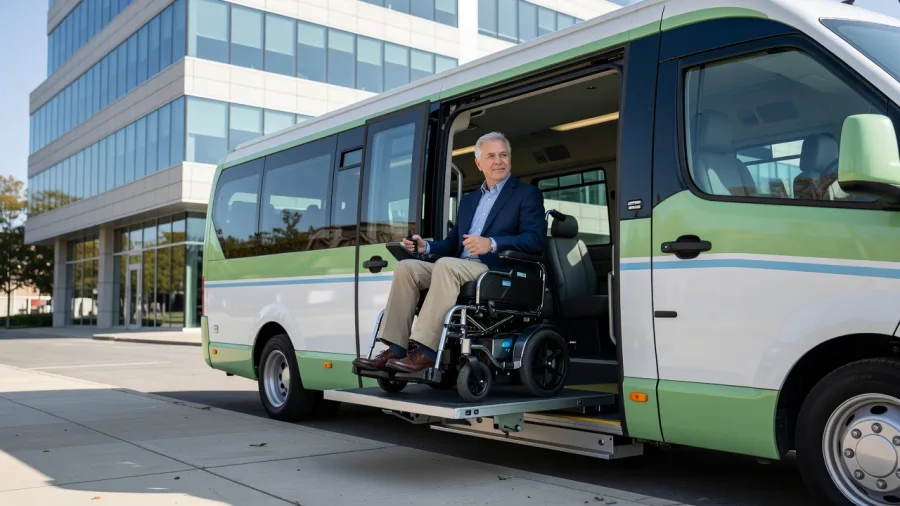
If you own a car but can no longer drive it safely because of a disability, VR may fund modifications to make it accessible and operable. This can include hand controls for people who cannot use foot pedals, wheelchair lifts or ramps, transfer seats, steering adaptations, and other adaptive equipment. The goal is to keep you in the driver's seat, literally, by adapting the vehicle to your current functional abilities rather than expecting you to adapt to a standard car.
Driver Rehabilitation Programs
Some disabilities require more than equipment adjustments. A certified driver rehabilitation specialist can evaluate your driving ability and work with you to relearn or adapt your driving skills safely. VR programs in many states can fund this evaluation and training process. For older adults recovering from a stroke, managing low vision, or adjusting to limb loss, this is often a critical step that makes independent transportation possible again.
Public Transit Passes and Ride Subsidies
Not everyone wants to drive or can safely return to driving, and that is completely reasonable. VR can often provide funding for public transportation passes, paratransit services, or ride-share subsidies while you are actively participating in job training or seeking employment. This kind of vocational rehabilitation transportation assistance for older adults with disabilities is especially valuable in urban areas where transit networks are robust but may still carry a cost that creates a financial barrier.
Mileage Reimbursement
If you are able to get a ride from a family member or friend to attend VR appointments, job training, or interviews, some state VR programs will reimburse mileage to that driver. The rate and policy vary by state, so ask your counselor directly about this option. It is a simple but meaningful form of support that reduces the burden on both you and the people helping you.
Relocation Assistance
In some cases, the most practical solution to a transportation barrier is not adapting how you travel but reducing how far you need to travel. If a job opportunity exists in a location closer to reliable transit or more accessible infrastructure, VR may provide relocation assistance to help cover moving costs. This is not a universal benefit and is typically reserved for situations where relocation is clearly connected to achieving an employment goal, but it is worth discussing with your counselor if geography is a genuine obstacle.
What to Expect From the VR Process
Starting with VR is straightforward. You apply through your state VR agency, which you can find by searching for your state name along with Vocational Rehabilitation on any search engine. After you apply, the agency will contact you to schedule an intake appointment. From there, you may be asked to provide documentation of your disability, and the agency may conduct its own evaluation of your functional abilities and employment barriers.
Once determined eligible, you will be assigned a counselor who will help you build your Individualized Plan for Employment. Be open and specific about your transportation challenges during this conversation. The more clearly you describe the barrier, including distance from work, inability to drive, lack of nearby transit, or cost of accessible rides, the better your counselor can advocate for the services you actually need.
Tip: Write down your transportation challenges before your first appointment. Include details like how far you live from your target workplace, whether local transit is accessible to you, and any specific limitations your disability creates when it comes to driving or riding in standard vehicles.
Other Resources That Work Alongside VR
VR does not operate in isolation. Depending on your situation, your counselor may also connect you with complementary programs that support transportation and employment, such as state aging services, Centers for Independent Living, or local nonprofit transportation programs for older adults. If you receive Social Security Disability Insurance or Supplemental Security Income, your VR participation may also align with the Ticket to Work program, which allows you to explore employment without immediately losing your benefits.
Take the First Step Today
Transportation barriers are real, but they are not permanent. Vocational rehabilitation transportation assistance for older adults with disabilities is available in every state, and the services can be comprehensive, covering everything from vehicle modifications and driver training to transit passes and relocation support. You have worked hard throughout your life, and if you want to keep working, you deserve the support to make that possible.
To get started, visit the official Rehabilitation Services Administration website at rsa.ed.gov to find your state VR agency, or call your state's VR office directly to ask about applying. You can also call the Job Accommodation Network helpline at 1-800-526-7234 for free guidance on disability-related employment barriers and resources. The process takes time, but every step you take brings you closer to the work and independence you are after.
Advertisement