Advertisement
Understanding Public Housing Income Based Rent
If you or someone you love is struggling to keep up with housing costs, public housing may be one of the most valuable programs available to you. Managed by the federal Department of Housing and Urban Development (HUD) and operated through local agencies across the country, public housing is designed to make safe, stable housing affordable for people with limited incomes. At the heart of this program is a simple but powerful idea: your rent is based on what you earn, not on what the market charges. That is what makes public housing income based rent such an important resource for older Americans and others on fixed incomes.
What Is Public Housing?
Public housing is a federally funded program that provides affordable rental housing to eligible low-income individuals and families. Unlike a housing voucher program where you find your own apartment, public housing places residents in units that are owned and managed by local Public Housing Authorities (PHAs). These authorities operate independently in cities and counties throughout the United States, which means the availability, application process, and specific rules can vary depending on where you live.
The types of units available through public housing are more varied than many people expect. Options can include:
- Single-room apartments for individuals
- Multi-bedroom units for families
- Townhouse-style homes
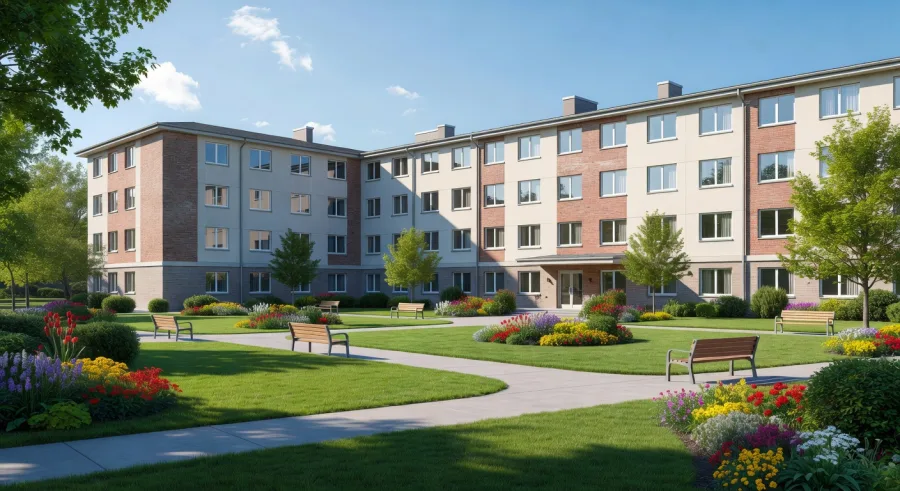
- Senior-specific housing communities
Across the country, more than 970,000 families currently call public housing home. Many of these residents are seniors, people with disabilities, and working families who simply cannot afford market-rate rents in their communities.
How Does Public Housing Income Based Rent Work?
The rent calculation in public housing is straightforward in principle. Residents generally pay approximately 30% of their monthly adjusted income toward rent and utilities. This is sometimes called the Total Tenant Payment (TTP). If your utility costs are included in your rent, the calculation stays simple. If you pay utilities separately, your rent amount may be adjusted downward to account for those costs.
What Counts as Income?
Your PHA will look at your household income when calculating your rent. This typically includes:
- Social Security and Supplemental Security Income (SSI) payments
- Pension and retirement income
- Wages and salaries from employment
- Certain types of investment or rental income
Some deductions and exclusions may apply. For example, PHAs may subtract medical expenses that exceed a certain threshold for elderly or disabled households, as well as childcare expenses and other allowable costs. These deductions can meaningfully lower your adjusted income and, in turn, reduce your monthly rent payment. Your local PHA can walk you through exactly which deductions apply to your situation.
A Simple Example of How Rent Is Calculated
Example: If your household brings in $1,200 per month in Social Security income, and after allowable deductions your adjusted income is $1,000, you would generally pay around $300 per month in rent. That is 30% of $1,000. Actual amounts vary by location and household circumstances.
This income-based approach means that if your income drops, your rent can drop too. PHAs typically require residents to recertify their income annually so rent stays aligned with what you can actually afford.
Who Qualifies for Public Housing?
Public housing is available to three main groups: low-income families, seniors age 62 and older, and individuals with disabilities. To qualify, your household income must fall below limits set by HUD for your area. These limits are based on the Area Median Income (AMI) for your county or metro region and are updated annually, so the exact thresholds vary by location and year.
In addition to income requirements, applicants must:
- Be a U.S. citizen or have eligible immigration status
- Pass a background screening conducted by the local PHA
- Not have a history of certain drug-related or violent criminal activity (policies vary by PHA)
- Have a satisfactory rental history in some cases
It is worth noting that each PHA sets its own preferences and eligibility rules within HUD guidelines. Some PHAs give priority to elderly applicants, veterans, or people who are currently experiencing homelessness. This means applying sooner rather than later is always a good idea, especially since waiting lists in many areas can be long.
What to Expect When You Apply
Applying for public housing starts with contacting your local Public Housing Authority. You can find your local PHA through the HUD website at HUD.gov. The application will ask for information about your household size, income sources, and current living situation.
Because demand for public housing often exceeds availability, many PHAs maintain waiting lists. Wait times can range from a few months to several years depending on the area. Some PHAs open and close their waiting lists periodically, so it helps to check in regularly. If you are placed on a waiting list, keep your contact information current and respond promptly to any communications from the PHA so you do not lose your spot.
Why Public Housing Matters for Older Americans
For Americans 55 and older living on Social Security, a pension, or other fixed income, housing costs can be one of the most stressful financial pressures. Public housing income based rent removes much of that uncertainty by tying your payment to what you actually earn. Many public housing communities also offer senior-specific amenities, accessible design, and proximity to transportation and services that matter most as we age.
If you have never looked into public housing before, it is worth your time to explore. This is a program you have helped fund through a lifetime of work and taxes, and it exists precisely to support people in situations like yours.
Take the Next Step Today
Ready to find out if public housing is an option for you or a family member? Visit HUD.gov to locate your local Public Housing Authority, learn about income limits in your area, and get information on how to apply. You can also call HUD directly at 1-800-955-2232 to speak with a housing counselor who can answer your questions and guide you through the process. Do not wait to explore this benefit — the sooner you apply, the sooner you can work toward more affordable, stable housing.
Advertisement