Advertisement
When most people think about Meals on Wheels, they picture a hot meal arriving at the door of a homebound senior. That image is accurate — but it may only tell half the story. A growing body of research is connecting the dots between consistent nutrition, reduced social isolation, and slower cognitive decline in seniors, and programs like Meals on Wheels sit right at the center of that conversation. If you or someone you love is concerned about brain health, this government-supported benefit may be worth a much closer look.
Why Nutrition Matters for Brain Health in Seniors
The brain is a hungry organ. It consumes roughly 20 percent of the body's energy, and it depends on a steady supply of nutrients to function well. For older adults, getting adequate nutrition becomes more difficult for several reasons:
- Reduced appetite and changes in taste can make eating less appealing.
- Physical limitations may make shopping and cooking difficult or unsafe.
- Fixed incomes can force difficult choices between food and other necessities.
- Living alone can reduce the motivation to prepare full, balanced meals.
When nutrition suffers, the brain suffers too. Deficiencies in key nutrients — including B vitamins, omega-3 fatty acids, vitamin D, and antioxidants — have been associated with accelerated cognitive decline and a higher risk of conditions like dementia. Consistent, balanced meals are not a cure, but they are a foundation. And that is exactly what Meals on Wheels is designed to provide.
The Isolation Connection: Loneliness and the Aging Brain
Nutrition is only part of the picture. Researchers have identified social isolation as one of the most significant risk factors for cognitive decline in older adults. Studies have found that lonely seniors experience faster memory loss and are at a higher risk of developing dementia compared to those who maintain regular social connections.
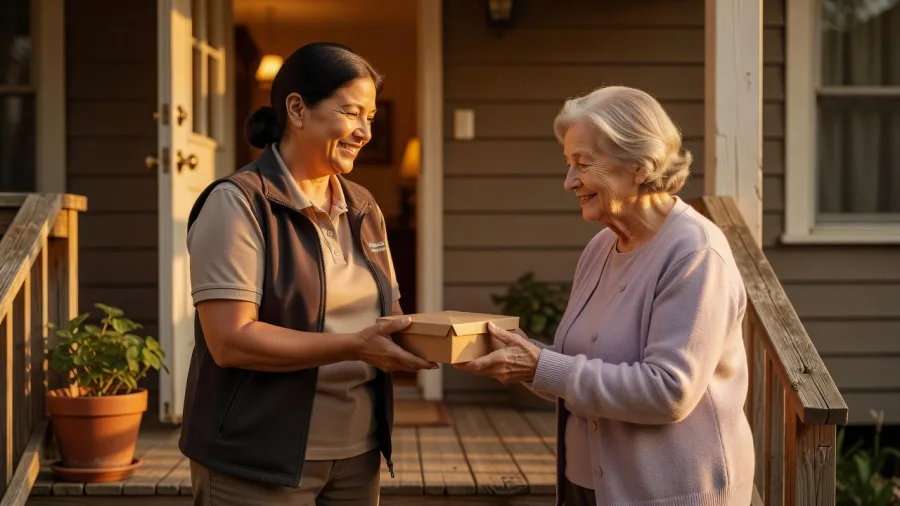
This is where Meals on Wheels offers something that goes well beyond a hot lunch. Most local programs include a daily wellness check as part of the delivery — a volunteer or staff member stops by, asks how the recipient is doing, and takes a few minutes to connect. For seniors who may go days without meaningful human interaction, that brief visit can be a lifeline.
For many homebound seniors, the Meals on Wheels delivery driver may be the only person they see face-to-face that day. That human contact, however brief, adds up over time.
That daily touchpoint creates consistency and social engagement, two things that researchers believe help keep the brain active and engaged. It is not a replacement for deeper relationships, but for isolated seniors, it can meaningfully reduce the burden of loneliness.
What the Research Is Showing About Meals on Wheels and Cognitive Decline
Scientists have begun studying whether home-delivered meal programs like Meals on Wheels have measurable effects on brain health in seniors. While this research is still evolving, early findings are encouraging:
- Seniors who receive home-delivered meals report improved nutritional intake compared to those who do not, reducing deficiencies linked to cognitive impairment.
- Recipients of Meals on Wheels programs show improvements in mental health indicators, including reduced feelings of depression and anxiety — both of which are connected to faster cognitive decline.
- The daily check-in component of many programs has been shown to improve feelings of safety and social connectedness, which are associated with better cognitive outcomes.
- Consistent meal delivery has also been linked to fewer hospitalizations, which helps seniors avoid the cognitive disruptions that often accompany major medical events.
Researchers are careful to note that more longitudinal studies are needed. But the emerging picture is consistent: addressing hunger, isolation, and nutrition together — as Meals on Wheels does — may create conditions that support healthier brain aging.
It Is Not Just About the Food
Program coordinators and volunteers who work in Meals on Wheels will tell you something that the research is beginning to confirm: recipients often say the daily visit matters as much as the meal itself. Knowing that someone is coming, that someone will notice if something is wrong, and that someone simply cares — these things have a real and measurable effect on a senior's sense of wellbeing.
That psychological safety net is not incidental to the program's value. For seniors living with early memory concerns, knowing there is a consistent daily routine and a caring person checking in can reduce anxiety and help maintain a sense of stability. Routine and structure are important for everyone, but they are especially valuable for aging brains.
Who Qualifies for Meals on Wheels?
Meals on Wheels programs are generally available to adults aged 60 and older who have difficulty leaving their home to shop or prepare food. Many programs serve individuals of all income levels, and the cost to recipients is often low or nothing at all — many programs operate on a voluntary contribution basis, meaning you pay what you can afford.
Eligibility details, availability, and meal options vary depending on where you live, so it is important to check with your local program directly. Programs are funded through a combination of federal support under the Older Americans Act, state and local funding, and private donations.
- No strict income requirement in most locations.
- Recipients are typically homebound or face barriers to preparing food independently.
- Both short-term and long-term enrollment may be available depending on need.
- Some programs also offer frozen meals, weekend delivery, or special dietary options.
How to Sign Up
Getting started is straightforward. You can reach your local Meals on Wheels program by visiting the national Meals on Wheels America website and using their local program finder. You can also contact your local Area Agency on Aging, which coordinates services for older adults in your community and can connect you to meal delivery and many other support programs.
If you are helping an aging parent or loved one, you can make the call or inquiry on their behalf. Most programs have intake coordinators who will walk you through the process and answer questions about what to expect.
A Simple Step That Could Make a Real Difference
Protecting brain health in seniors does not always require expensive treatments or complicated interventions. Sometimes it starts with something as straightforward as making sure an older adult eats a nutritious meal every day and has a friendly face checking in on them. Meals on Wheels provides both — and the emerging research on its connection to cognitive decline prevention gives families even more reason to explore it.
If you or someone you love is homebound, struggling to cook, or simply not eating as well as they should, this program is worth exploring right away.
Next step: Visit MealsOnWheelsAmerica.org to find your local program and start the enrollment process. You can also call the Eldercare Locator at 1-800-677-1116 to be connected to your local Area Agency on Aging for guidance.
Advertisement