Advertisement
If you receive a Housing Choice Voucher — commonly known as Section 8 — your rental unit must pass a federal inspection before you move in and regularly after that. For many seniors, this process can feel confusing or even stressful. What exactly do inspectors look at? Who is responsible for fixing problems? And most importantly, what happens if your home fails? Understanding Section 8 housing inspection requirements for seniors is one of the most important steps you can take to protect your housing assistance and keep a safe, stable roof over your head.
Why Housing Inspections Exist
HUD — the U.S. Department of Housing and Urban Development — requires that all units rented using a Housing Choice Voucher meet minimum health and safety standards. These standards are called Housing Quality Standards (HQS). The goal is simple: every voucher holder should live in a decent, safe, and sanitary home.
Inspections are not meant to be a trap or a burden for tenants. They are designed to protect you. For older adults especially, living in a unit that meets HQS means fewer hazards, better air quality, working utilities, and safer conditions overall.
What Inspectors Look for Under HQS
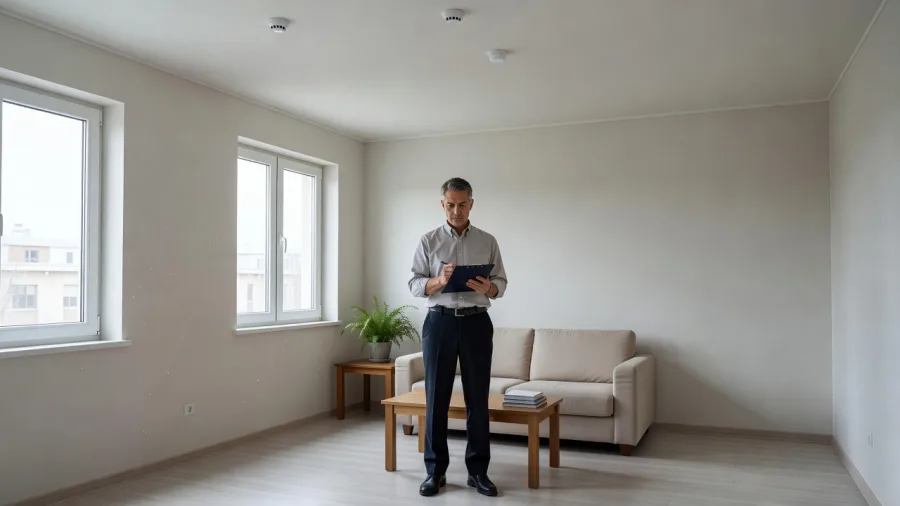
When a HUD-approved inspector visits your unit, they check a wide range of items throughout the home. Here are the main categories they evaluate:
- Sanitary facilities: Toilets, sinks, and bathing areas must be in working order and properly ventilated.
- Food preparation and refuse disposal: The kitchen must have a working stove, oven, and refrigerator, plus adequate space and facilities to prepare and store food.
- Space and security: Every bedroom and living area must have proper lighting, lockable entry doors, and windows that open and close.
- Thermal environment: The unit must have adequate heating — and cooling in some climates — to maintain a healthy temperature.
- Illumination and electricity: Sufficient electrical outlets, working light fixtures, and no exposed wiring.
- Structure and materials: Floors, walls, ceilings, and roofs must be free of serious defects. Stairs and railings must be stable.
- Interior air quality: No major mold, pest infestations, or dangerous fumes from heating systems.
- Water supply: Hot and cold running water connected to an approved source.
- Lead-based paint: If the unit was built before 1978 and children under six reside there, special lead paint standards apply.
- Smoke and carbon monoxide detectors: Working detectors are required in key locations throughout the unit.
Your local Public Housing Authority (PHA) will schedule inspections before you move in and at least annually after that. Some PHAs inspect more frequently depending on a unit's history.
Section 8 Housing Inspection Requirements for Seniors: What Puts Payments at Risk
Not every inspection issue is treated the same way. HQS violations are grouped into categories based on severity:
- Life-threatening deficiencies must be fixed within 24 hours. Examples include no heat in winter, gas leaks, or missing smoke detectors. If these are not repaired immediately, the PHA can suspend rental payments right away.
- Non-life-threatening deficiencies typically must be corrected within 30 days. These might include a broken window lock, minor water damage, or a malfunctioning electrical outlet.
If deficiencies are not fixed within the required timeframe, your PHA may abate — or suspend — housing assistance payments to the landlord. This can quickly put your tenancy at risk if the landlord stops receiving payment.
Important: Suspension of payments does not automatically mean you lose your voucher. But it does create urgency. Acting quickly is essential.
Who Is Responsible for Making Repairs?
This is one of the most common points of confusion for voucher holders. Here is a simple breakdown:
- The landlord is responsible for the vast majority of repairs — anything related to the structure, plumbing, heating systems, appliances provided with the unit, and building safety features like smoke detectors.
- The tenant may be responsible for damage caused by their own household, such as a broken window caused by a family member or a pest infestation that resulted from improper food storage.
If a tenant-caused deficiency is not fixed, the PHA can still suspend payments — and may even terminate your voucher if the problem is serious or repeated. This is why it is important to report any maintenance issues to your landlord in writing as soon as they arise.
What to Do If Your Unit Fails an Inspection
Failing an inspection does not mean you are immediately out of your home. Here are the steps to take right away:
- Get the inspection report in writing. Your PHA should provide a list of all violations found. Review each one carefully.
- Notify your landlord immediately. Send a written notice — text, email, or letter — describing each violation and asking for a repair timeline. Keep a copy for your records.
- Follow up in writing. If the landlord does not respond or begin repairs promptly, follow up again in writing and contact your PHA to let them know.
- Request a re-inspection. Once repairs are completed, ask your PHA to schedule a re-inspection as soon as possible. The sooner the unit passes, the sooner payments resume.
- Ask your PHA about tenant protections. Many PHAs have procedures that protect tenants from eviction during the repair period, especially when the violations are the landlord's responsibility.
- Seek help if needed. Local legal aid organizations, senior centers, and housing counseling agencies can provide free advice and advocacy if you feel your rights are not being respected.
Tips for Seniors to Stay Ahead of Inspections
A little preparation goes a long way. Here are some proactive habits that can help you sail through your next inspection:
- Test your smoke and carbon monoxide detectors monthly and replace batteries as needed.
- Report any leaks, mold, or pest activity to your landlord right away — in writing.
- Keep common areas tidy and free of clutter that could block exits or create hazards.
- Know your rights. Ask your PHA for a copy of their grievance policy so you understand your options if disputes arise.
Section 8 Housing Inspection Requirements for Seniors: Your Next Step
Inspections are ultimately there to protect you — not to make your life harder. The best thing you can do is stay informed, communicate openly with your landlord, and work with your local PHA when issues come up.
If you are not yet enrolled in the Housing Choice Voucher program, now is a good time to explore your options. Wait lists can be long, so getting on them early matters.
Visit HUD.gov or call 1-800-955-2232 to find your local Public Housing Authority, check if waitlists are open in your area, and learn more about housing assistance programs available to seniors and low-income individuals near you.
Advertisement