Advertisement
You've heard about the senior transit discount last mile transportation solution — the idea that combining a reduced fare card with other services can make public transit truly accessible, not just affordable. But for millions of older Americans, the harder problem isn't the fare. It's the walk. When the nearest bus stop is three blocks away, uphill, or across a busy intersection without a bench in sight, even a free ride doesn't feel free. The good news is that a growing number of programs are designed specifically to close that gap — and most people who qualify don't know they exist.
Understanding Your Senior Transit Discount Card
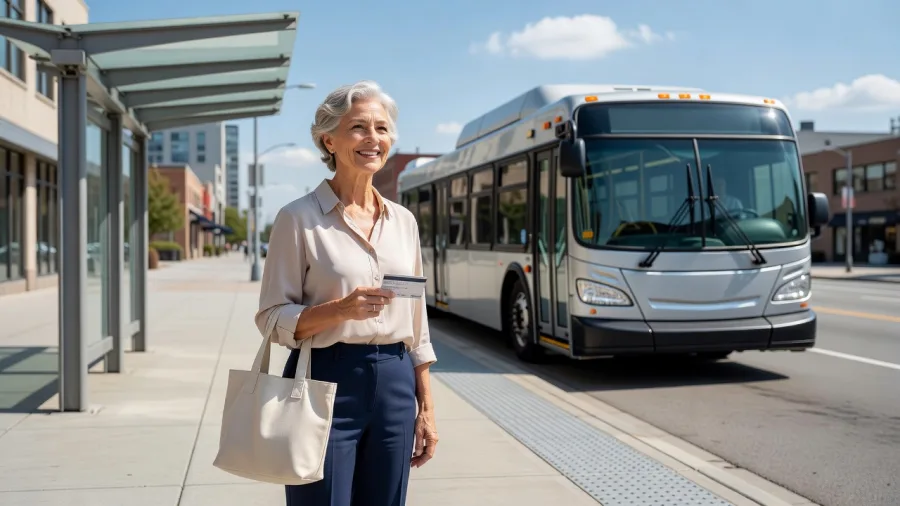
Most major public transit systems in the United States offer reduced fares for riders age 65 and older, as well as for people with qualifying disabilities. Discounts typically range from 50% off the standard fare to completely free rides, depending on where you live and which system you use.
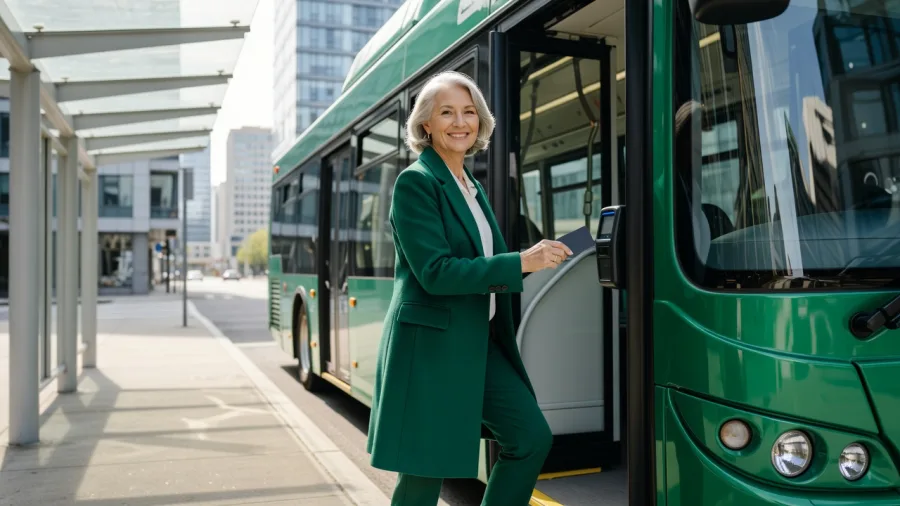
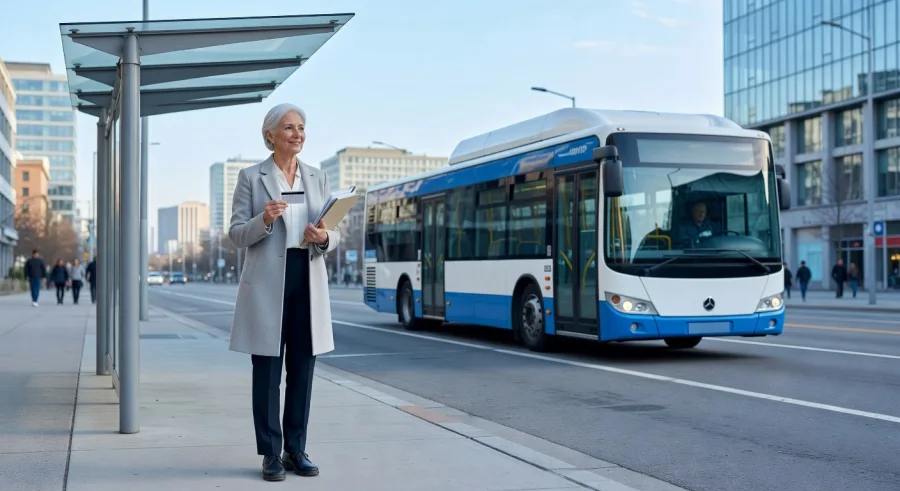
To access these discounts, you generally need to apply for a reduced fare card or a special senior ID through your local transit authority. The application process is usually straightforward and may require proof of age — such as a driver's license, passport, or Medicare card — along with a recent photo. Some systems let you apply online, while others ask you to visit a transit office in person.
- Eligibility age: Most programs start at 65, though some begin at 62 or even 60. Check your local transit authority's website for specifics.
- Disability eligibility: People with disabilities who qualify under the Americans with Disabilities Act may receive similar or identical discounts regardless of age.
- Card validity: Most cards need to be renewed periodically. Keep an eye on expiration dates so your discount doesn't lapse unexpectedly.
Once you have your card, you're only halfway there — especially if that last stretch between your front door and the bus stop is the real obstacle.
The Last Mile Problem: Why It Matters for Older Riders
Transportation planners call it the last mile problem — the gap between a fixed transit stop and where a rider actually needs to start or end their journey. For younger, able-bodied commuters, a five-minute walk is trivial. For an older adult managing arthritis, balance issues, or limited stamina, that same walk can make an entire trip impossible.
This is a critical equity issue, and it's one reason why transit agencies and nonprofits have developed a range of supplemental services aimed at seniors. The key is knowing that these services exist and how to layer them with your existing transit benefits.
Senior Transit Discount Last Mile Transportation Solutions Worth Knowing
Think of your reduced fare card as the core of a transportation toolkit. The programs below are the tools that complete the set.
Dial-a-Ride and Paratransit Services
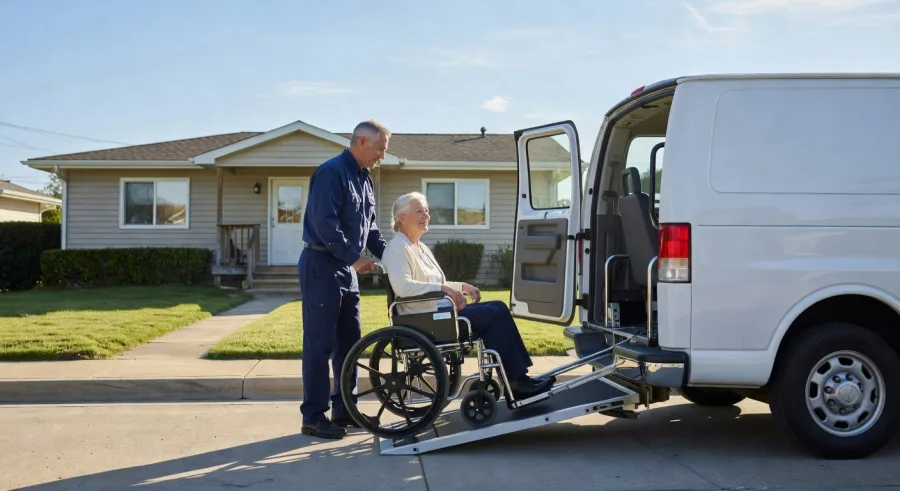
Many transit agencies operate paratransit or dial-a-ride services alongside their fixed-route buses and trains. These are door-to-door or curb-to-curb services that pick you up close to your home and drop you at your destination — or at a transit hub where you can transfer to a fixed-route line using your reduced fare card.
Under federal law, transit agencies that receive federal funding are required to provide paratransit service to people with disabilities who cannot use fixed-route transit. Eligibility is functional, meaning it's based on your ability to use the regular bus or train, not just on a diagnosis. Fares for paratransit are typically capped at twice the standard reduced fare, which still keeps costs low for seniors with discount cards.
Not all dial-a-ride services are limited to people with disabilities. Many agencies offer them to all seniors above a certain age. Call your local transit authority's accessibility services line to ask what's available in your area.
Subsidized Rideshare Programs for Seniors
A growing number of cities and counties have partnered with rideshare companies like Uber and Lyft to offer subsidized rides for older adults. Under these arrangements, a government agency or nonprofit covers part of the cost, and the rider pays a reduced amount — sometimes as little as a flat fee per trip.
These programs are particularly well-suited to bridging the last mile. You might use a subsidized rideshare to get from home to a transit hub, then use your senior transit discount card for the longer leg of the journey. Some programs are funded through Area Agencies on Aging, while others are run by county health departments or local nonprofits. Availability and subsidy amounts vary widely by location.
Tip: Search for your county's name plus the phrase senior transportation assistance to find programs in your area. Your local Area Agency on Aging is also a reliable starting point — they maintain directories of transportation resources for older adults.
Volunteer Driver Networks
Volunteer driver programs are one of the most underused transportation resources available to older Americans. These networks — run by faith communities, nonprofits, and sometimes local governments — match older adults with trained volunteers who provide rides to medical appointments, grocery stores, and other essential destinations.
Because these rides are provided by volunteers, there is often little or no cost to the rider. Some programs ask for a small suggested donation to help with operating costs. National organizations like ITNAmerica and AARP's Community Connections can help you locate volunteer driver programs near you. Many local senior centers also coordinate or can refer you to these networks.
Combining Programs: Building Your Personal Transit Plan
The most effective approach for many seniors is to combine two or three of these options into a personal transportation plan that works for their specific situation. Here is one example of how that might look in practice:
- Use a volunteer driver or subsidized rideshare to get from home to a major transit hub.
- Ride the bus or subway to your destination using your senior reduced fare card.
- On the return trip, if timing is tight or weather is poor, use a dial-a-ride pickup scheduled in advance.
This kind of layered approach takes a little planning but can dramatically expand where you're able to go and how often you're able to get there — without relying entirely on family members or spending money on full-price taxis or rideshares.
Your Next Step: Find Your Senior Transit Discount Last Mile Transportation Solution Today
The best place to start is your local transit authority's website, where you can learn how to apply for a reduced fare card and find out whether dial-a-ride or paratransit services are available. From there, contact your local Area Agency on Aging — you can find yours at eldercare.acl.gov or by calling the Eldercare Locator at 1-800-677-1116 — to ask about subsidized rideshare and volunteer driver programs in your community. These calls are free, the staff are helpful, and the programs they connect you with could make a meaningful difference in your independence and quality of life.
Advertisement