Advertisement
If you've noticed water stains on your ceiling, musty smells in your basement, or peeling paint on interior walls, your first instinct might be to call a plumber or HVAC technician. But for many homeowners 55 and older, the real culprit is something hiding right outside — and it has nothing to do with your pipes. Gutter failure interior water damage in attics, walls, and older homeowners' living spaces is one of the most commonly misdiagnosed — and most expensive — home repair problems you can face. Understanding how this damage travels from your roofline inward could save you thousands of dollars in misdirected repairs.
How Gutters Protect More Than Just Your Yard
Gutters seem simple. They catch rainwater and direct it away from your home. But when they fail — whether from age, clogs, sagging, or separation at the seams — that water doesn't disappear. It finds the path of least resistance, and that path often leads directly into your home's structure.
Healthy gutters protect your foundation, siding, landscaping, and roof from the relentless pressure of water intrusion. When they stop doing their job, the damage doesn't always show up immediately outside. Instead, it quietly migrates inward, sometimes for months or years, before you notice anything visible. By that point, the repair bill has often grown dramatically.
Foundation repairs alone can run anywhere from $5,000 to $10,000 or more, depending on the severity of damage. Compare that to the typical cost of new gutters — generally $1,000 to $3,000 for an average-sized home — and the math makes a compelling case for acting early.
The Silent Migration: How Outside Damage Becomes Inside Damage
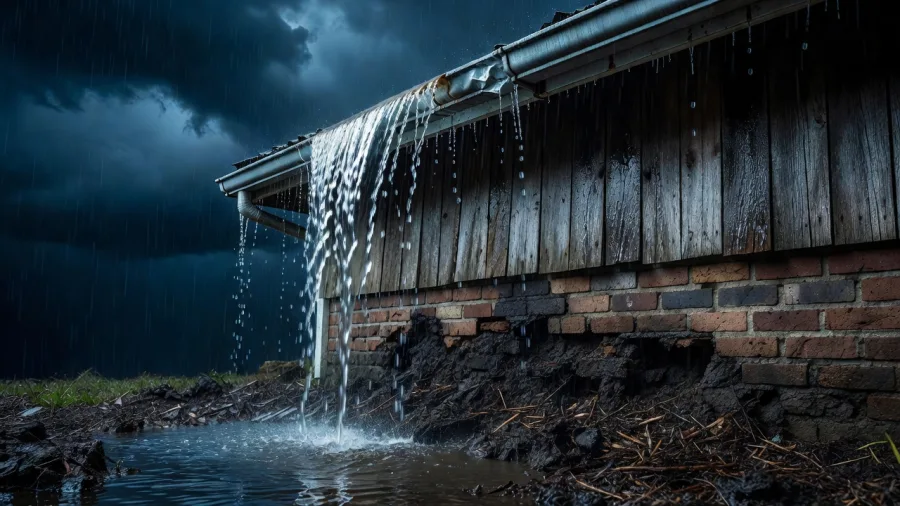
Think of your home as a system. Water that overflows a clogged gutter doesn't just run down your siding. It saturates the fascia board behind the gutter, seeps under shingles at the roofline, and works its way into the wood framing beneath. Over time, this creates a slow-moving wave of moisture damage that travels room by room — starting outside and ending up in your most-used living spaces.
Here is how that progression typically unfolds, and what signs to watch for in each area of your home.
Gutter Failure Interior Water Damage: What Your Attic Is Telling You
The attic is almost always the first interior space to show signs of gutter-related water intrusion. Because most homeowners don't spend much time up there, damage can go undetected for seasons at a time. Look for:
- Dark staining or streaking on the underside of roof decking near the eaves
- Soft or spongy spots in the decking — a sign the wood is already compromised
- Insulation that looks matted, wet, or discolored near the outer edges
- Mold or mildew growth along rafters or in corners — often mistaken for an HVAC condensation issue
That last point catches many older homeowners off guard. When an HVAC technician finds mold in the attic, gutter overflow is rarely the first thing they check. But if the mold is concentrated near the exterior walls and eaves rather than around ductwork or the air handler, water intrusion from outside is the far more likely explanation.
Interior Walls and Ceilings: When the Damage Moves Downstairs
Once moisture establishes itself in your attic's framing and insulation, it begins working its way down through the wall cavities. This is where gutter failure interior water damage in walls becomes genuinely dangerous — and genuinely expensive — for older homeowners who may dismiss early warning signs as cosmetic issues.
Common signs of wall and ceiling damage caused by prolonged gutter failure include:
- Brown or yellowish water stains on ceilings, especially near exterior walls
- Bubbling, cracking, or peeling paint on interior walls — frequently misread as normal aging or humidity
- Soft drywall or plaster that dents when pressed, even without visible water staining
- Recurring mold spots near baseboards on exterior-facing walls, often diagnosed as a ventilation problem
A well-meaning contractor who doesn't investigate the source may patch the drywall, repaint, and leave. But if the gutters are still overflowing, the problem will return — usually worse — within a year or two.
Basement and Foundation: The Final Stop on a Long Journey
When gutter overflow saturates the soil around your home's foundation repeatedly over time, the results can be severe. Water pressure builds against basement walls, seals crack, and moisture finds its way inside. Many homeowners spend significant money on interior waterproofing systems or sump pumps — legitimate solutions in some cases, but completely unnecessary if the real problem is a gutter system that hasn't been replaced in 20 years.
Proper gutter drainage prevents basement flooding, mold growth behind finished walls, and the kind of soil erosion that destabilizes your foundation over time. Before investing in any interior waterproofing fix, it's worth having your gutters professionally inspected first.
Why Older Gutters Are Especially Risky
Most sectional gutters — the kind installed on the majority of homes built before the 1990s — have seams every few feet where sections join together. Those seams are the first places to fail. They separate, rust, and leak long before the gutter sections themselves wear out, making the whole system look fine from the ground while quietly sending water where it shouldn't go.
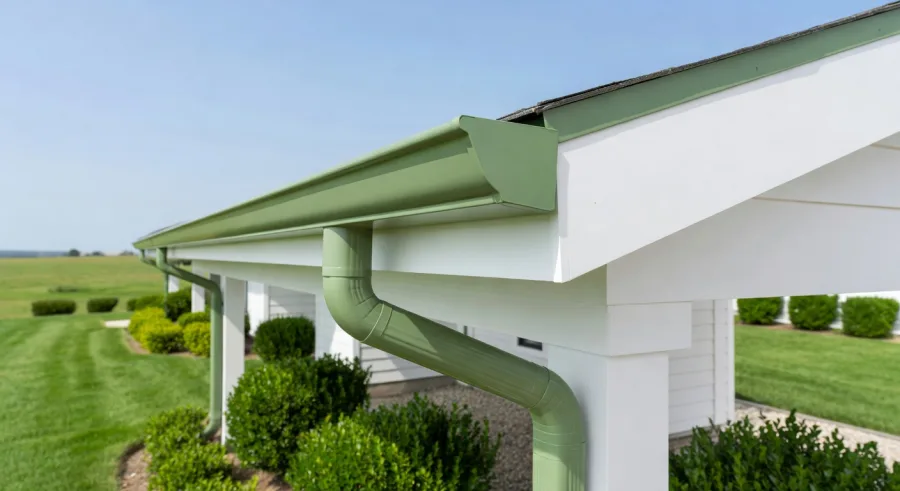
Seamless gutters, by contrast, are cut to the exact length of your roofline with no intermediate joints. They leak less, last longer, and require less maintenance. Paired with gutter guards that prevent leaves and debris from clogging the channel, a modern seamless system dramatically reduces the risk of the overflow-and-intrusion cycle described throughout this article.
What to Do Before You Call Anyone Else
If you've already paid for a plumbing inspection, an HVAC service call, or a drywall repair that didn't solve the underlying problem, you're not alone. Here's a simple checklist to run through before spending another dollar on interior repairs:
- Walk the perimeter of your home during or right after a heavy rain and watch where water is going
- Look for soil erosion, pooling water, or green moss growing along your foundation — all signs of chronic overflow
- Check your gutters for sagging, separation at seams, rust stains, or paint peeling off the exterior below the gutter line
- Look in your attic with a flashlight after a rainstorm and check the eave areas for any signs of moisture
A good rule of thumb: If your gutters are more than 15 to 20 years old and have never been replaced, they deserve serious scrutiny — especially if you've been dealing with recurring interior water problems that no one has been able to fully explain.
Take the Next Step Before the Damage Goes Any Further
The good news is that replacing your gutters is one of the most cost-effective home improvements you can make. For most homes, a new seamless gutter system with guards is a fraction of the cost of the interior damage it prevents. Many gutter companies offer free inspections, and some areas have local assistance programs for older homeowners that can help offset costs — so it's worth asking.
Start by getting two or three quotes from licensed gutter contractors in your area, and ask specifically about seamless options and gutter guard systems. The sooner you address the source of the problem, the less damage will continue migrating through your home's walls, attic, and foundation — and the more money you'll keep in your pocket where it belongs.
Advertisement