Advertisement
If you are a senior living on a fixed income, you may already know that every dollar counts when it comes to groceries. What many people do not realize is that two powerful government food programs — CSFP and SNAP — can be used at the same time. Learning how to use CSFP and SNAP benefits together for seniors is one of the smartest moves you can make to stretch your food budget further each month. This guide walks you through exactly how these two programs work side by side, what each one covers, and how to get started with both.
What Is CSFP and Who Qualifies?
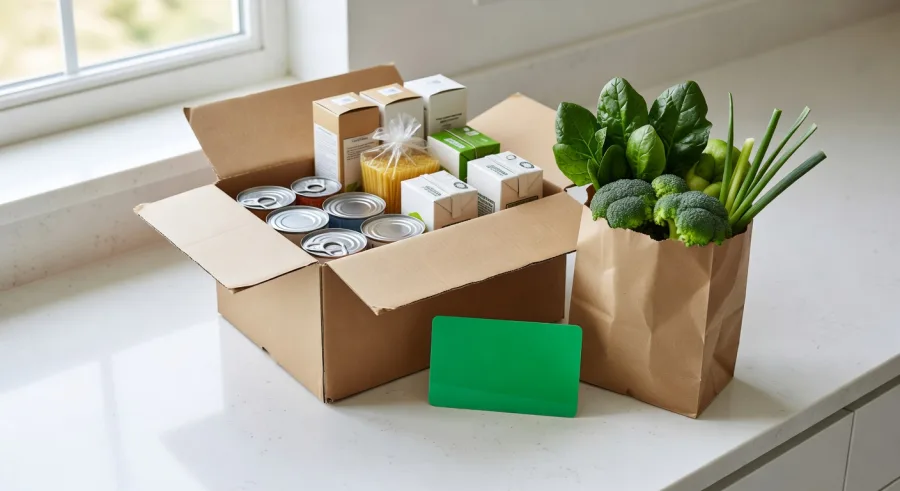
The Commodity Supplemental Food Program, commonly known as CSFP, provides monthly food boxes to low-income adults age 60 and older. Each box is packed with nutritious, shelf-stable staples like canned fruits and vegetables, canned meat, cereal, pasta, cheese, juice, and shelf-stable milk. The value of each monthly package is approximately $50 or more, depending on what is available that month.
CSFP is distributed through local food banks, community organizations, and other approved distribution sites. Over 700,000 seniors across the country currently participate in the program. Eligibility is based on age and income, and income limits are set as a percentage of the federal poverty level. Because limits can vary slightly depending on your state and household size, it is worth checking with your local distribution site to confirm whether you qualify.
What Is SNAP and How Does It Work for Seniors?
SNAP — the Supplemental Nutrition Assistance Program — provides monthly benefits loaded onto an EBT card that works like a debit card at most grocery stores and many farmers markets. SNAP benefits can be used to purchase a wide range of foods, including fresh produce, meat, dairy, bread, and frozen items.
For seniors, SNAP can be especially valuable because it fills in the gaps that a food box program like CSFP cannot. While CSFP delivers pantry staples, SNAP gives you the flexibility to buy fresh foods, proteins you prefer, and household-specific items that a standard box may not include. Benefit amounts vary based on your income, household size, and state, so your monthly SNAP amount may be different from your neighbor's.
How to Use CSFP and SNAP Benefits Together as a Senior
Here is the most important thing to understand: receiving CSFP does not affect your SNAP eligibility or benefit amount. These two programs are completely separate, and you are allowed — even encouraged — to use both at the same time. Together, they cover very different parts of your monthly food needs.
Think of it this way:
- CSFP covers your pantry foundation. Each month, your food box arrives stocked with canned goods, grains, cheese, and other staples. These are foods that last a long time and form the base of many meals.
- SNAP covers fresh, frozen, and flexible needs. Use your EBT card to pick up fresh vegetables, fruit, eggs, meat, bread, and anything else your household needs that the food box does not include.
- Together, they stretch your fixed income further. When your pantry is already stocked through CSFP, your SNAP dollars go further because you are not spending them on basics like canned beans, pasta, or cereal.
A Simple Month-to-Month Strategy
Here is a practical approach you can follow every month to make the most of both programs:
- Pick up your CSFP box first. Once you know what staples you have on hand, you can plan your SNAP shopping around those items. If your box came with canned tomatoes and pasta this month, your SNAP dollars can go toward ground beef, fresh herbs, and a vegetable to complete the meal.
- Build meals around your box contents. Before your next SNAP shopping trip, look at what came in your food box and plan three to five simple meals using those ingredients. Then use SNAP to fill in the remaining pieces.
- Use SNAP for perishables. Fresh produce, dairy, meat, and bread tend to be the items not covered well by a monthly food box. Prioritize those categories with your EBT card.
- Stock up on staples when SNAP allows. If you receive a comfortable SNAP amount, consider using a small portion to build a backup supply of items you use frequently, like cooking oil, spices, or frozen proteins.
Why This Combination Works So Well for Seniors on Fixed Incomes
Most seniors receiving these benefits are managing on Social Security, a small pension, or both. Monthly grocery costs can easily consume a large share of that income. When CSFP handles the pantry basics and SNAP handles fresh and flexible needs, the combined value of both programs can meaningfully reduce what you spend out of pocket each month.
Many seniors who enroll in both programs report that they are able to eat healthier, waste less food, and feel less financial stress around grocery shopping — simply by combining benefits they were already entitled to receive.
Beyond the financial benefit, eating well has real health consequences for older adults. Having consistent access to nutritious food supports energy levels, helps manage chronic conditions, and contributes to overall well-being.
How to Enroll in Both Programs
If you are not yet enrolled in one or both programs, the process is more straightforward than many people expect.
- For CSFP: Contact your local food bank or visit the USDA Food and Nutrition Service website to find a CSFP distribution site near you. Sites often have waitlists, so it is worth reaching out as soon as possible. You will typically need to show proof of age and income to enroll.
- For SNAP: Apply through your state's SNAP office, which you can find through the USDA SNAP website or by calling 1-800-221-5689. Many states also allow you to apply online, and some offer simplified applications for seniors.
If you already receive SNAP and are not yet enrolled in CSFP, you may be able to join without any change to your current SNAP benefits. Ask your local distribution site directly about how enrollment works in your area.
Take the Next Step Today
You do not have to choose between CSFP and SNAP. Both programs exist to support you, and using them together is exactly what they are designed for. If you are 60 or older and have limited income, you may qualify for both right now.
Start here: Visit the USDA Food and Nutrition Service website at fns.usda.gov to find your nearest CSFP distribution site and to learn more about applying for SNAP. You can also call 1-800-221-5689 for SNAP assistance in your state. Taking a few minutes today to explore both programs could add real value to your monthly food budget — and put nutritious food on your table every single week.
Advertisement