Advertisement
If you are one of the more than 700,000 seniors who receives a monthly food box through the Commodity Supplemental Food Program (CSFP), you already know how much those staples can help stretch a tight budget. But if you are also living with a chronic illness like diabetes, heart disease, or kidney disease, you may have looked at that box and wondered: Can I actually eat this? The good news is that the CSFP food box for seniors with diabetes and chronic illness does not have to be a source of stress. With a little planning and some smart communication with your local distributor, you can make this benefit work for your health — not against it.
What Comes in a CSFP Food Box?
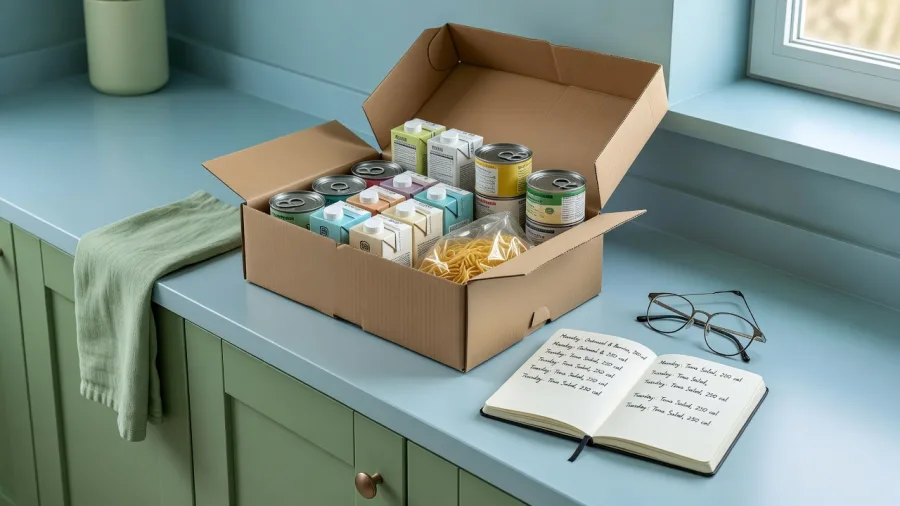
Each month, CSFP participants receive a package of shelf-stable foods worth approximately $50 or more, though the exact value and contents can vary by state and local agency. A typical box might include:
- Canned fruits and vegetables
- Canned meat or fish (such as tuna or chicken)
- Cereal
- Pasta or rice
- Cheese
- Juice
- Shelf-stable milk
These are wholesome, filling foods — but for seniors managing specific medical conditions, some items may need to be approached carefully or swapped out when possible.
CSFP Food Box for Seniors with Diabetes: Managing Carbohydrates
For seniors with type 2 diabetes or prediabetes, carbohydrate management is often a top priority. Some CSFP staples — like certain cereals, pasta, and juice — can cause blood sugar spikes if eaten in large portions or without balancing foods alongside them.
Practical Tips for Diabetic-Friendly Use
- Watch portion sizes on cereals and pasta. A half-cup of cooked pasta has far fewer carbohydrates than a full bowl. Use a measuring cup to stay on track.
- Pair carbohydrates with protein. Eating canned tuna or chicken alongside pasta or cereal helps slow the absorption of sugar into your bloodstream.
- Choose low-sugar canned fruit when possible. Look for labels that say packed in water or 100% juice rather than heavy syrup. If your box includes fruit in syrup, rinse it briefly under water to reduce some of the added sugar.
- Limit juice or dilute it. Even 100% fruit juice raises blood sugar quickly. Consider diluting it with water or saving it for a time when your blood sugar is running low.
- Ask about lower-glycemic substitutions. Some local CSFP agencies have flexibility in what they offer. Ask if whole grain or lower-sugar cereal options are available.
Always talk to your doctor or a registered dietitian about specific targets for your carbohydrate intake. Your healthcare provider can give you a personalized plan that incorporates CSFP items.
Adapting Your CSFP Box for Heart Disease and High Blood Pressure
A low-sodium diet is one of the most common recommendations for seniors managing heart disease, high blood pressure, or heart failure. Canned goods are notoriously high in sodium, which can make a CSFP box tricky to navigate without some adjustments.
Reducing Sodium in Canned Foods
- Rinse canned vegetables and beans thoroughly. Studies have shown that rinsing canned vegetables under water for about 30 seconds can reduce sodium content by a meaningful amount.
- Compare labels when you have options. If your CSFP distribution site allows you to choose between items, look for low-sodium or no-salt-added versions of canned goods.
- Use cheese sparingly. Cheese is naturally high in sodium. Enjoy it in small portions or use it as a flavor accent rather than a main ingredient.
- Flavor food with herbs instead of salt. Dried herbs and spices — which you can often find at dollar stores or food pantries — add flavor without raising your blood pressure.
If your physician has placed you on a strict sodium restriction, bring a copy of that guidance to your local CSFP distribution site. Some agencies are willing to work with participants to provide lower-sodium alternatives when they are available.
Kidney Disease and the CSFP Box: Navigating Potassium and Phosphorus
Seniors with chronic kidney disease (CKD) often face some of the most complex dietary restrictions. High-potassium and high-phosphorus foods — including certain canned fruits, vegetables, dairy products, and whole grains — may need to be limited depending on your stage of kidney disease and your lab results.
Working Around Kidney Diet Restrictions
- Do not make assumptions — ask your nephrologist first. Kidney dietary needs vary significantly from person to person. What is off-limits for one patient may be fine for another.
- Leaching vegetables can reduce potassium. This involves peeling, cutting, soaking in water for several hours, and then cooking in fresh water. Ask your renal dietitian if this method is appropriate for your situation.
- Limit or avoid high-potassium canned items. Tomatoes, potatoes, and certain beans are high in potassium. If these appear in your CSFP box, ask your dietitian how to handle them.
- Cheese and milk may be limited. Dairy is high in phosphorus. If your doctor has restricted phosphorus, consume these items only in the amounts your care team recommends.
How to Talk to Your Local CSFP Agency About Your Health Needs
Many seniors do not realize that their local CSFP distributor — whether it is a food bank, community center, or senior center — may have more flexibility than you think. Here is how to start that conversation:
- Bring documentation from your doctor. A written note or a copy of your dietary restrictions from your physician or dietitian gives the agency a clear picture of your needs and shows you are serious.
- Ask specifically what substitutions are available. Not every site will have options, but it never hurts to ask. Some agencies rotate items or have alternative packages for participants with medical needs.
- Connect with a registered dietitian through your local Area Agency on Aging. Many communities offer free or low-cost nutrition counseling for seniors. A dietitian can help you build a meal plan using your CSFP foods and flag which items to avoid.
- Contact your state CSFP coordinator. If your local site cannot accommodate your needs, your state agency may have additional resources or guidance.
You Deserve Benefits That Work for Your Health
Living with a chronic illness is challenging enough without worrying about whether your food assistance is making things harder. The CSFP food box for seniors with diabetes and chronic illness can absolutely be part of a healthy routine — it just takes a little extra thought and, sometimes, a helpful conversation with your care team or local agency.
Remember: you are not obligated to eat every item in your CSFP box. Share items that do not work for your diet with a neighbor, donate them back to your local food pantry, or swap them with a friend who participates in the same program.
The most important step you can take is to not go it alone. Talk to your doctor, connect with a dietitian, and reach out to your local CSFP site. These resources exist to support your health and your independence.
Ready to Enroll or Learn More?
If you are not yet enrolled in CSFP and you are 60 or older with a limited income, you may qualify for monthly food packages at no cost to you. To find your nearest CSFP distribution site or learn about enrollment, visit the USDA Food and Nutrition Service website or contact your local food bank. You can also reach out to your local Area Agency on Aging for help navigating eligibility and connecting with nutrition support services in your community.
Advertisement