Advertisement
Your Vouchers Arrived — Here Is What Happens Next
If you just received your Senior Farmers Market Nutrition Program vouchers in the mail, congratulations. That small booklet or envelope represents real money toward fresh fruits, vegetables, and herbs — and it came to you because you qualified for a program designed specifically to help lower-income seniors eat well. But knowing how to use senior farmers market vouchers for the first time is a different skill than just getting approved, and nobody hands you an instruction manual along with the vouchers.
That is exactly what this guide is for. Whether you have never been to a farmers market before or you simply are not sure how the voucher process works once you get there, we are going to walk through everything — step by step, booth by booth.
Before You Leave the House: Know What You Have
Start by looking carefully at your vouchers before your first market visit. Notice a few things:
- The denomination: Vouchers typically come in small face values — often one, two, or five dollars each — so your total seasonal benefit may arrive as a small stack of individual slips. The total amount varies by state and changes year to year.
- The expiration date: SFMNP is a seasonal program tied to local growing seasons. Your vouchers have a firm end date. Once that date passes, they cannot be redeemed. Mark it on your calendar now.
- Accepted items: Vouchers can only be used for fresh, unprepared fruits, vegetables, and herbs. You cannot use them for baked goods, jams, honey, meat, or prepared foods — even if those items are sold right next to the vegetables at the same booth.
Knowing these details before you arrive will make your first visit feel much more confident and less like a guessing game at the register.
How to Find a Participating Farmers Market
Not every farmers market accepts SFMNP vouchers, and not every vendor inside a participating market is authorized either. Here is how to find the right place:
- Your state agency that administered your vouchers should have included a list of participating markets. Check any paperwork you received.
- Call your local Area Agency on Aging. They almost always know which nearby markets are in the program.
- Look for posted signs at the market entrance that say the market participates in SFMNP or a similar state-named program.
Once you are at the market, look for individual vendor signs or stickers indicating they accept SFMNP vouchers. These are often small and easy to miss, so do not hesitate to ask.
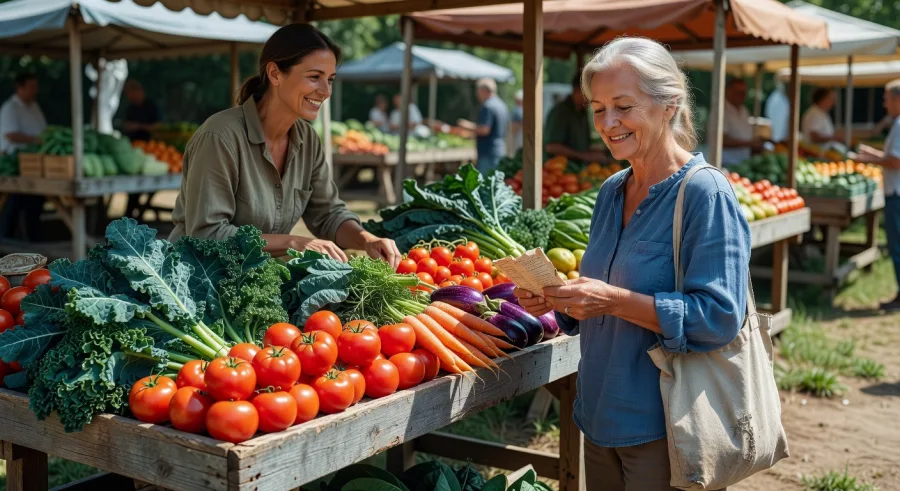
How to Use Senior Farmers Market Vouchers for the First Time at a Booth
This is where many first-timers feel a little uncertain, and that is completely normal. Farmers market transactions are usually quick and casual, but if you have never paid with vouchers before, it can feel awkward. Here is exactly what to do.
Step 1: Ask Before You Pick
Before you load up on tomatoes, walk up to a vendor and simply say: Do you accept SFMNP vouchers? Most participating vendors will immediately recognize the program and say yes. If they look unsure, you can also describe them as senior nutrition vouchers from the state. If a vendor does not participate, no hard feelings — just move to the next booth.
Step 2: Shop Within Your Budget
Because vouchers come in small denominations, it helps to keep a rough mental tally as you go. Pick out your produce, set it on the table, and ask the vendor for a total before handing over vouchers. This avoids the awkward moment of realizing you handed over too much or too little.
Step 3: Understand the No-Change Rule
This catches many first-timers off guard: vendors are not allowed to give you cash change for SFMNP vouchers. If your produce costs three dollars and you hand over a five-dollar voucher, you will not receive two dollars back. You will either need to add more produce to bring the total up or use smaller-denomination vouchers to match the purchase more closely. Planning ahead with smaller denominations makes this much easier.
Step 4: Hand Over the Vouchers Like Cash
Once you have agreed on your items and total, simply hand your vouchers to the vendor. They will review them, keep them, and give you your produce. It really is that simple. There is no card to swipe, no ID to show in most cases, and no receipt process that differs from a regular cash sale.
Common Mistakes to Avoid on Your First Visit
A few small missteps can make the experience feel discouraging, even when everything actually went fine. Watch out for these:
- Trying to use vouchers for ineligible items. Honey, eggs, bread, flowers, and prepared foods are not covered, even at participating booths. Stick to fresh, whole produce.
- Waiting until late in the season. It is easy to set those vouchers aside and forget about them. The expiration date is firm. Use them early and often.
- Feeling embarrassed to ask questions. Farmers market vendors who participate in SFMNP have done this before. They welcome voucher customers. A quick question is never an imposition.
- Going at peak crowded times if lines make you uncomfortable. Many markets are quieter in the first hour they open. Vendors have more time to chat and help you through the process.
Making the Most of Every Voucher Dollar
Because the seasonal total is modest, a little strategy goes a long way. Seasonal produce is almost always the best value — it is fresher, more abundant, and often priced lower than out-of-season items. Ask vendors what is in peak season right now. Many love talking about their best crops and will steer you toward the ripest, most affordable options.
A good question to ask any vendor: What is your best deal today? You will be surprised how often a vendor lights up and points you toward something wonderful.
You can also spread your visits across several market days rather than spending everything at once. That way you get produce at its freshest and build a comfortable routine around the market schedule.
Your Next Step: Confirm Your Vouchers Are Ready to Use
If you have not yet applied for the Senior Farmers Market Nutrition Program or are unsure whether your vouchers are still valid, the best first step is to contact your state's SFMNP administering agency — usually the state department of agriculture or a health and human services office. You can also call the USDA Food and Nutrition Service or reach out to your local Area Agency on Aging for guidance specific to your area. Do not let those vouchers sit in a drawer. Fresh produce is waiting, and this program exists specifically to help you access it.
Advertisement