Advertisement
A Friendly Face at the Door — and So Much More
For millions of homebound seniors across the country, the knock at the door from a Meals on Wheels volunteer is not just about a hot meal. It may be the only face-to-face contact they have all day. That brief, daily interaction turns out to be one of the most powerful — and underappreciated — tools in senior safety, including Meals on Wheels medication safety monitoring for seniors who live alone or have limited family support nearby.
This article explains how that daily touchpoint works, what volunteers are trained to notice, what they are and are not allowed to do, and how families can coordinate with local programs to add an extra layer of protection for a loved one.
Why Daily Contact Matters for Medication Safety
Medication mismanagement is a serious and surprisingly common problem among older adults. Missed doses, accidental double-dosing, running out of a critical prescription, or confusion about instructions can lead to hospitalizations and serious health setbacks. For seniors living alone, these situations can go unnoticed for hours or even days.
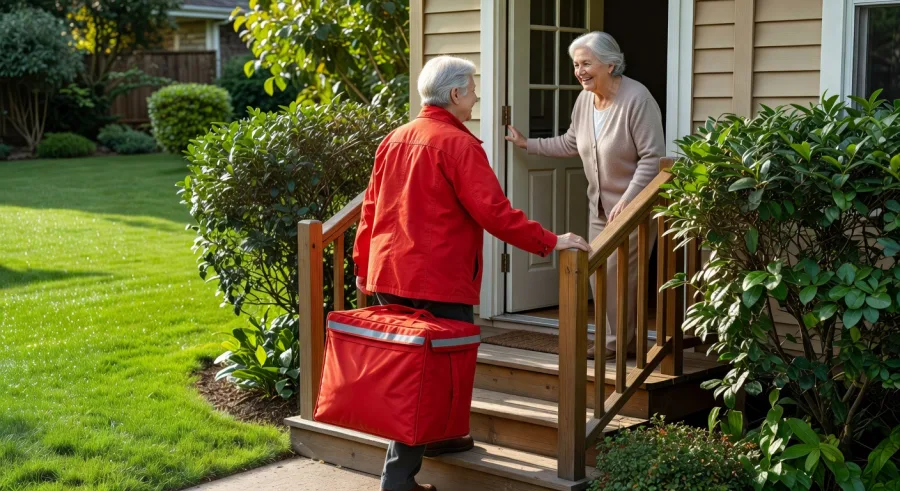
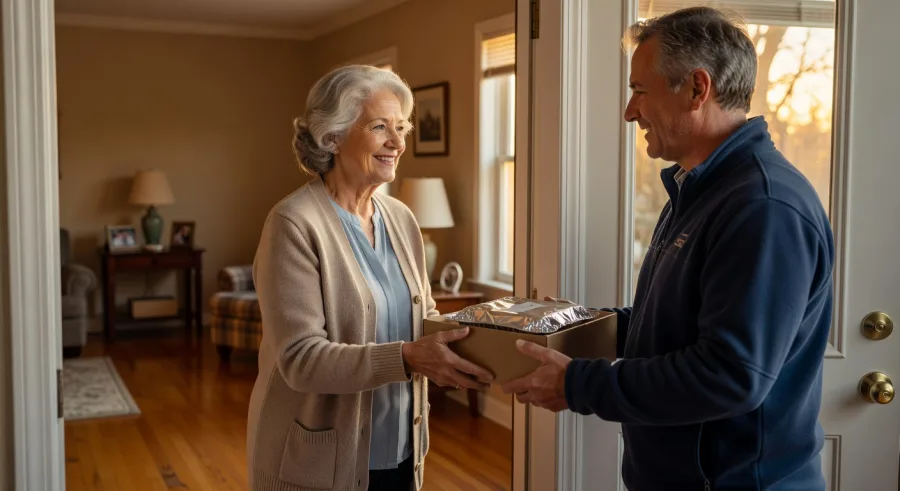
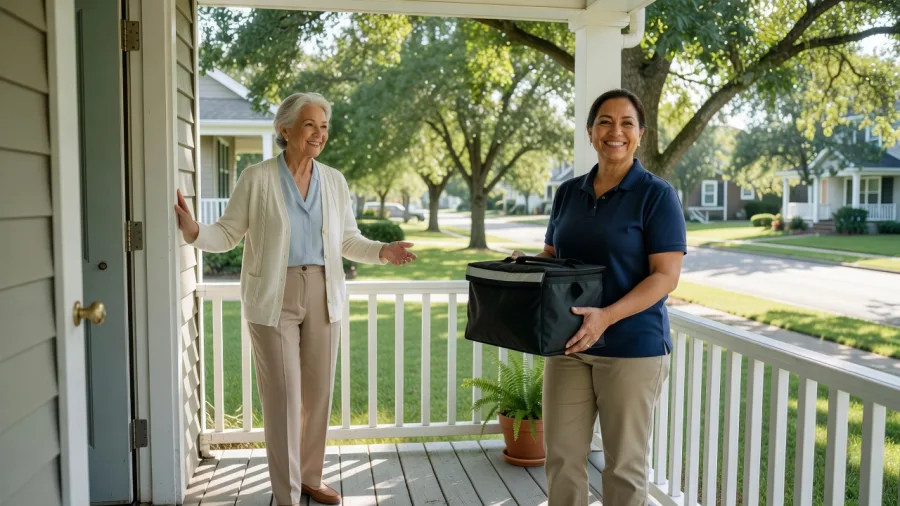
That is where the daily rhythm of Meals on Wheels becomes quietly powerful. Because drivers and volunteers show up at roughly the same time each day, they develop a familiarity with each recipient. They know when something seems off. They notice a change in mood, confusion, unanswered doors, or a mention of not feeling well — details that a family member across town might never hear about until a crisis unfolds.
What Meals on Wheels Volunteers Are Trained to Look For
Most local Meals on Wheels programs train their volunteers and staff to do more than drop off food. The delivery itself is considered a daily wellness check, and volunteers are encouraged to pay attention to signs that a recipient may need additional support.
When it comes to medication-related concerns, volunteers may be alert to situations such as:
- A senior who seems unusually confused, disoriented, or difficult to rouse
- Complaints of dizziness, nausea, or feeling faint — which can be signs of a medication reaction or missed dose
- Mention of skipping medications due to cost or difficulty picking up a prescription
- Visible signs of distress, weakness, or a change in physical appearance from one day to the next
- A senior who mentions they have not eaten or taken their pills because they did not feel well
Volunteers are not medical professionals, and they are not expected to diagnose or treat anything. But they are often given a clear protocol for what to do when something concerns them — and that protocol can make a real difference.
What Volunteers Can and Cannot Do
It is important to understand the role volunteers play and where its limits are. Meals on Wheels volunteers are observers and reporters, not caregivers or clinicians. They are not authorized to handle medications, remind a senior to take a pill, read a prescription label, or offer any kind of medical advice.
What they can do is flag a concern through the appropriate channels. Depending on the local program, this might mean:
- Reporting a concern to a supervisor or program coordinator immediately after a visit
- Contacting an emergency contact listed on the recipient's file
- Calling 911 in situations that appear to be medical emergencies
- Documenting observations so that patterns can be tracked over time
Some programs partner with local Area Agencies on Aging or home health organizations to ensure that flagged concerns reach a professional who can follow up. The level of coordination varies by location, so it is worth asking your local program what their specific process looks like.
How Families Can Use Meals on Wheels as a Safety Net
If you have a parent or loved one who receives Meals on Wheels, you can take a few simple steps to make that daily visit work harder as a Meals on Wheels medication safety monitoring resource.
Provide Updated Emergency Contact Information
Make sure the local program has your current phone number and knows you are willing to be contacted if a volunteer notices something concerning. Many programs have a space for this in their intake paperwork, but it may not be updated automatically if your information changes.
Talk to Your Loved One About Openness
Encourage your family member to feel comfortable mentioning medication concerns, side effects, or confusion to their volunteer. Some seniors are reluctant to say anything because they do not want to seem like a burden. Reassure them that these conversations are welcome and important.
Ask the Program About Their Wellness Check Protocol
Call your local Meals on Wheels program and ask directly: What happens if a volunteer notices something worrying? How are concerns communicated? Is there a care coordinator or social worker involved? Understanding the process helps you know what to expect and fills in any gaps.
Coordinate With a Home Health Provider If Needed
Meals on Wheels does not replace medical care, but it can work alongside it. If your loved one already has a home health aide or visiting nurse, let both the Meals on Wheels program and the health provider know about each other. A brief note in both files can create a more connected circle of support.
The Bigger Picture: Social Connection and Health
Research consistently shows that social isolation is a major health risk for older adults — linked to cognitive decline, depression, and poorer management of chronic conditions including those requiring regular medication. The Meals on Wheels volunteer who smiles, chats for a few minutes, and genuinely cares whether a senior is doing okay is providing something that goes beyond nutrition.
That five-minute conversation at the door can be the thing that catches a dangerous medication situation before it becomes an emergency.
Programs across the country serve millions of seniors each year, and many of those recipients have few or no other daily contacts. Treating that delivery moment as the safety opportunity it truly is — for families, for volunteers, and for the seniors themselves — is one of the simplest ways to close a gap that could otherwise go unnoticed for too long.
How to Get Started or Learn More
If you or someone you love could benefit from Meals on Wheels — whether for the nutrition, the daily wellness check, or both — getting connected is straightforward. Most programs are free or low-cost, and many ask only for a voluntary contribution based on what you can afford.
The best next steps are:
- Visit the Meals on Wheels America website and use their program locator to find your nearest provider
- Contact your local Area Agency on Aging by calling the Eldercare Locator at 1-800-677-1116 — a free, federally funded service that can connect you with local resources
- Ask your doctor or hospital discharge planner to help initiate a referral if your loved one has recently been hospitalized
You do not have to wait for a crisis to reach out. Enrolling early, updating contact information, and building a relationship with your local program are among the most proactive things a family can do to support a senior's safety and independence at home.
Advertisement