Advertisement
Millions of older Americans receive both Social Security and SNAP benefits with Social Security income counted as part of the eligibility calculation. If you are retired or on disability and wondering whether you can still qualify for food assistance, the short answer is: yes, many seniors can and do. But the relationship between these two programs is nuanced, and a change in one can quietly affect the other. Here is what you need to know.
How Social Security Income Counts Toward SNAP Eligibility
SNAP eligibility is based largely on your household income and size. When you apply, the government looks at both your gross income (total before deductions) and your net income (after certain allowed deductions). Social Security retirement benefits, survivor benefits, and Social Security Disability Insurance (SSDI) payments all count as income under SNAP rules.
That does not mean Social Security automatically disqualifies you. In fact, many seniors with modest Social Security checks fall well within the income limits, especially if they live alone or have significant medical expenses that qualify as deductions. SNAP allows deductions for things like:
- A standard deduction available to all households
- Earned income deductions (if you still work)
- Medical expense deductions for elderly or disabled household members
- Excess shelter costs, including rent and utilities
These deductions can meaningfully lower your countable net income, making it easier to qualify even if your gross Social Security benefit looks too high at first glance. It is worth running the numbers before assuming you do not qualify.
SSI Recipients and Automatic SNAP Eligibility
There is an important distinction between regular Social Security and Supplemental Security Income (SSI). SSI is a needs-based program for people with very low income and limited resources, regardless of work history. Many states use a policy called categorical eligibility, which means that if you already receive SSI, you may qualify for SNAP automatically without a separate income review.
In these states, SSI recipients are considered categorically eligible because the income and resource tests for SSI are already strict enough to serve as a proxy for SNAP eligibility. If you receive SSI, contact your local SNAP office or ask about categorical eligibility in your state. This could significantly simplify your application process.
If you receive SSI, you may qualify for SNAP with little or no additional paperwork in many states. Ask your caseworker about categorical eligibility.
How Social Security COLA Adjustments Can Affect Your SNAP Benefits
Each year, Social Security recipients typically receive a Cost-of-Living Adjustment (COLA), a percentage increase designed to help benefits keep pace with inflation. While a COLA increase is generally good news, it can have an unexpected side effect: your SNAP benefit amount may decrease, or in rare cases, you could lose eligibility altogether.
Here is why. When your Social Security payment goes up, your countable income goes up. SNAP recalculates your benefit based on that new income figure. Even a modest COLA increase of a few dollars per month can reduce your monthly food assistance by a small amount, because SNAP benefits are calculated on a sliding scale tied to income.
The important thing to know is that you are required to report income changes to your SNAP office, including Social Security COLA increases, if they push your income above a certain reporting threshold. Failing to report changes can result in an overpayment that you will be asked to repay later. Check with your state SNAP office about what changes must be reported and when.
What Steps to Take When Your Social Security Income Changes
Whether your Social Security income is going up due to a COLA, a change in benefit type, or a new household situation, here are the steps you should take to protect your SNAP benefits:
- Review your SNAP notice: Each year, SNAP sends renewal and review notices. Read them carefully and respond on time.
- Report income changes promptly: Contact your state SNAP office when your Social Security amount changes. Ask whether the change needs to be reported under your state rules.
- Request a recalculation: If your income dropped or you have new medical expenses, ask your caseworker to recalculate your benefit. You may qualify for more assistance than you are currently receiving.
- Check your medical expense deductions: Seniors 60 and older can deduct out-of-pocket medical expenses above a small threshold. This includes prescription costs, health insurance premiums, dental care, and more. Many seniors miss this deduction.
- Ask about recertification timelines: SNAP requires periodic recertification. Missing a deadline can interrupt your benefits even if you still qualify.
SNAP Benefits With Social Security Income: A Realistic Example
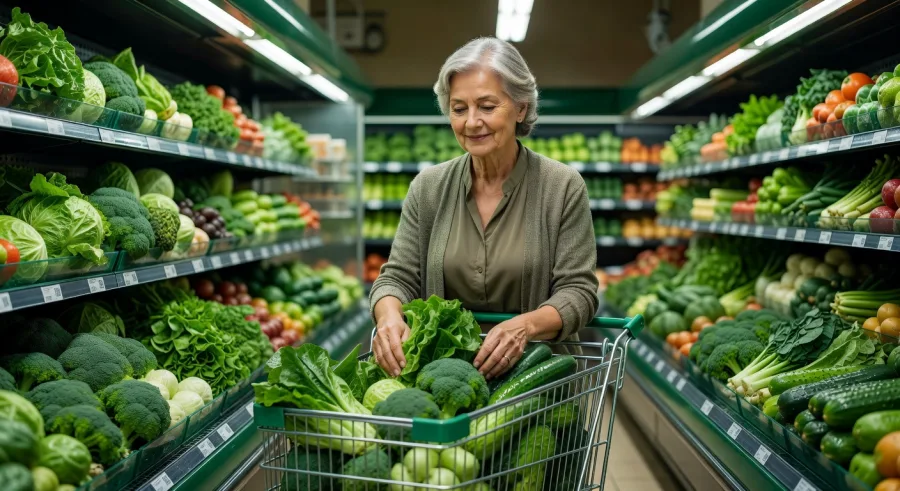
Consider a single retired woman in her late 60s living alone. She receives a modest Social Security retirement benefit each month and rents an apartment. After applying the standard deduction and an excess shelter deduction for her rent, her net income may fall within SNAP limits, making her eligible for monthly food benefits loaded onto an EBT card.
That EBT card works like a debit card at most major grocery stores, including Walmart, Kroger, and Amazon Fresh, as well as thousands of local supermarkets. Benefits are loaded automatically each month, and there is no stigma in using them. SNAP exists precisely for situations like hers.
Do Not Assume You Do Not Qualify
One of the most common reasons eligible seniors do not receive SNAP is simply that they assume their Social Security income disqualifies them. This is often not true. Income limits vary by household size, and the deductions available to seniors can make a significant difference in the final eligibility calculation.
Even if you were denied in the past, it is worth reapplying if your circumstances have changed, especially if your expenses have increased or your household size has changed. Applications are free and typically take about 15 to 20 minutes to complete online. Most states process applications within 30 days, and emergency benefits may be available within 7 days for households in urgent need.
Your Next Step
If you receive Social Security and are not sure whether you qualify for SNAP, do not guess. The easiest way to find out is to use the pre-screening tool at benefits.gov or visit your state SNAP office website to check eligibility and start an application. You can also call the SNAP national hotline at 1-800-221-5689 for help finding local resources. There is no cost to apply, and the benefits can make a real difference at the grocery store every single month.
Advertisement