Advertisement
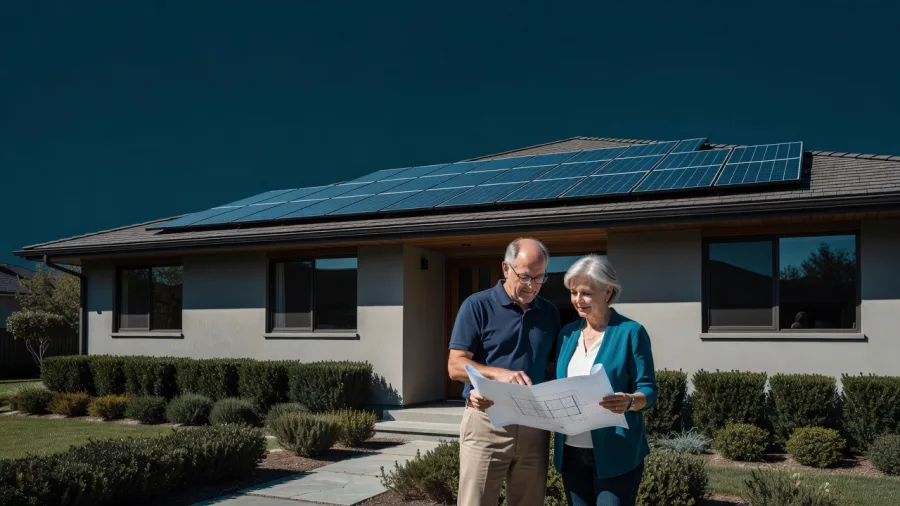
If you spend winters in Florida and summers in Michigan — or any version of that classic snowbird lifestyle — you already know that managing two homes comes with its own set of financial puzzles. Adding solar panels to the mix introduces a new layer of questions that most solar guides simply don't address. Which home should get the panels? Can you claim the federal tax credit on a second home? What happens to all that energy your system produces while you're hundreds of miles away? This guide is written specifically for solar panels second home snowbird retirees who want real answers before signing any contracts.
The Federal Solar Tax Credit: Does It Cover a Second Home?
The good news is that the federal Investment Tax Credit (ITC) — which currently covers 30% of your solar installation costs — is not strictly limited to your primary residence. According to IRS guidance, the credit can apply to a home you use as a residence, which can include a second home or vacation property, as long as you personally use it and it is not a rental property.
Here is the important distinction: if your second home sits vacant for part of the year but you live there seasonally, it likely qualifies. However, if you rent it out for income, the rules become more complicated, and the residential credit may not apply at all. In that case, there may be business or depreciation-related tax strategies available, but you will want a qualified tax professional to guide you through those options.
One more thing to understand: the ITC is a tax credit, not a deduction. That means it directly reduces your federal income tax bill dollar for dollar. If your tax liability is lower than the credit amount in a given year, you can carry the remaining credit forward to the following year. Retirees living largely on Social Security or modest investment income should run the numbers carefully with a tax advisor to confirm they can fully use the credit.
Which Home Should Get the Solar Panels?
This is one of the first questions snowbird retirees ask, and the answer depends on several factors beyond just where the sun shines brightest.
Electricity Costs and Usage
Solar pays off fastest where your electric bills are highest. If your summer home runs central air conditioning for months and your electric bills spike accordingly, that may be the stronger candidate. Review at least 12 months of billing history for each property before deciding.
State Incentives Matter a Lot
Beyond the federal credit, many states offer their own rebates, property tax exemptions, and sales tax waivers on solar equipment. These vary widely. Some Sun Belt states with abundant solar resources have strong incentive programs; others do not. The state where you install the system is the state whose incentives apply, so compare what is available in both locations before committing.
Roof Age and Condition
Solar panels are designed to last 25 years or more. If one of your homes has an aging roof that will need replacement in the next several years, that home may not be the right choice right now. Replacing a roof after panels are installed adds cost and complexity.
Net Metering When Nobody Is Home
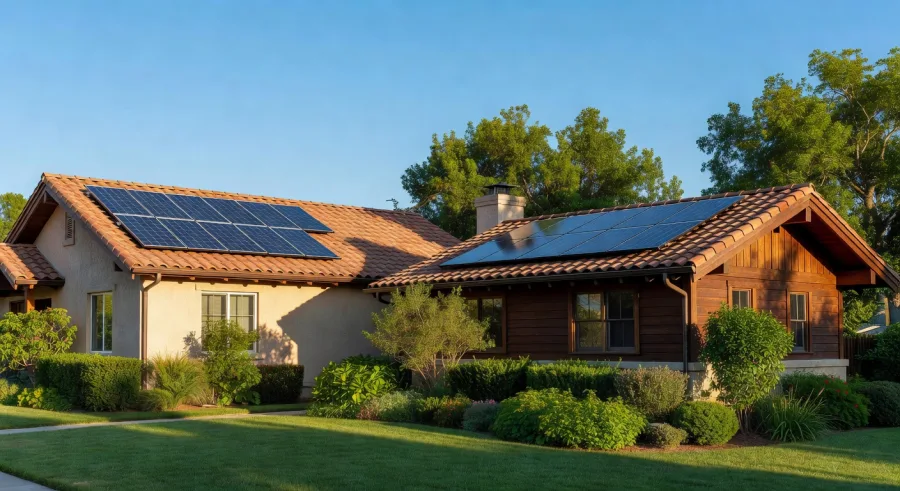
Net metering is one of solar's biggest financial benefits. When your system produces more electricity than you are using, the excess flows back to the grid and your utility company credits your account. For snowbirds, this feature becomes especially valuable — and a little more complicated.
During the months when your home sits empty, a solar system will likely generate far more power than the house uses. With net metering, those credits accumulate on your utility account and can offset the bills you do run up while you are in residence. Think of it as a savings account for electricity: you deposit credits in the sunny, vacant months and draw them down when you return.
However, net metering policies differ significantly from state to state and even utility to utility. Some states offer full retail-rate credits; others offer reduced compensation. A handful of utilities have moved away from traditional net metering in recent years. Before installing solar, contact your local utility in each state and ask specifically about their current net metering or solar buyback program for residential customers.
Financing Options for a Second Home
Paying for solar on a second home may require a different financing approach than your primary residence. Here are the main options to consider:
- Solar loans: Many lenders offer unsecured solar loans that do not require home equity. These can work well for second homes where a home equity line of credit may be harder to obtain or less desirable.
- Home equity financing: If you have significant equity in either property, a home equity loan or line of credit tied to your primary residence can fund installation at a second home.
- Solar leases and PPAs: These allow $0-down installation, but the solar company owns the panels. Leases and power purchase agreements can complicate a home sale and may not transfer smoothly to a new buyer — something to think carefully about with a vacation property.
- Cash purchase: For retirees with savings available, paying cash maximizes the financial return over time and keeps the process simple.
Practical Tips Before You Commit
- Get quotes from licensed solar installers in both states so you can compare total costs and available incentives side by side.
- Ask each installer specifically about their experience with second homes and seasonal properties.
- Consult a tax professional who understands the ITC before signing anything, especially if your retirement income is modest or you have questions about the credit carryforward rules.
- Check whether your homeowners insurance covers a solar installation on each property and whether your premiums will change.
- Consider a system monitoring app that lets you track energy production and spot problems remotely while you are away.
Going solar as a snowbird retiree takes a little more planning than it does for someone with one home, but the savings — on both properties — can be well worth the extra homework.
Your Next Step
The best starting point for any snowbird considering solar is to check what incentives are available in each state where you own property. The Database of State Incentives for Renewables and Efficiency — available at dsireusa.org — is the most comprehensive free resource for comparing state-by-state solar programs. Enter your zip code for each home to see every rebate, credit, and program currently available in that location.
From there, request at least two or three quotes from certified installers in each state, and schedule a conversation with your tax advisor before making a final decision. The solar panels second home snowbird retiree tax credit opportunity is real — it just rewards those who do their research first.
Advertisement