Advertisement
Why Solar Financing Can Be Harder Than It Should Be for Retirees
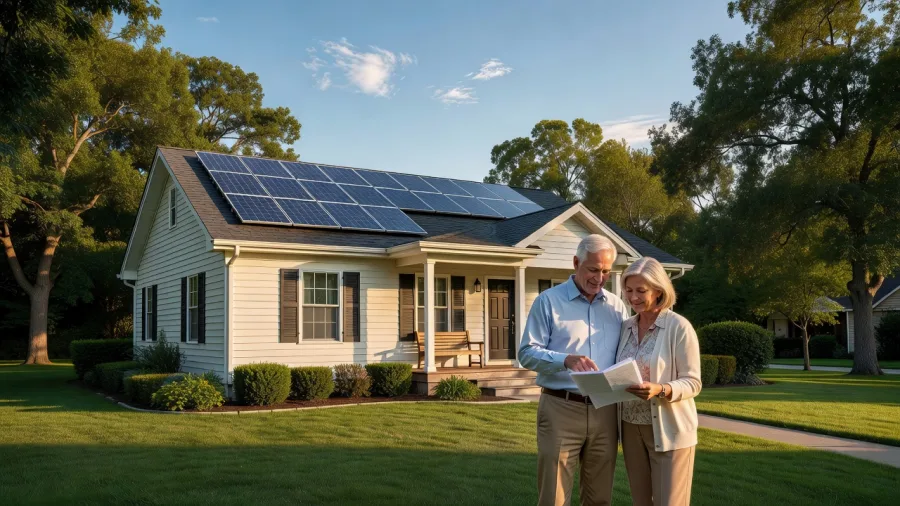
If your income comes from a pension, annuity, or Social Security, you may have already discovered that applying for solar financing feels oddly complicated. You have reliable, guaranteed income arriving every month like clockwork — and yet some lenders treat it as though it barely counts. For retirees exploring solar financing pension retirement income qualification, this disconnect is not just frustrating. It can cost you thousands of dollars if it steers you toward worse loan terms, or causes you to give up on solar altogether.
This guide explains why this happens, which financing products are built to work with retirement income, and exactly how to document your income so lenders cannot brush it aside.
The Hidden Problem: Employment-Based Underwriting Models
Most solar lenders built their underwriting systems around working-age borrowers with W-2 employment income. When their software sees a pay stub and an employer name, everything flows smoothly. When it sees a pension statement, an annuity contract, or a Social Security award letter, the system can stumble — or worse, a loan officer unfamiliar with retirement income may simply flag your file as unusual.
This is not necessarily intentional discrimination, but the effect is the same. Your income may be more stable than a salaried worker who could be laid off tomorrow, yet the underwriting model discounts it, reduces your approved loan amount, or assigns you a higher interest rate to compensate for perceived risk.
Pension and annuity income does not expire. Social Security income is backed by the federal government. These are among the most reliable income streams a lender could ever evaluate — and you deserve to have them treated that way.
Which Solar Financing Products Are More Retirement-Friendly
FHA Title I and Title II Loan Programs
Government-backed loan programs administered through the Federal Housing Administration are legally required to consider all verifiable income sources, including retirement income. If you are using a home equity-secured loan or a federally backed home improvement loan to finance solar, lenders participating in these programs cannot legally exclude pension or Social Security income from their calculations. Ask any solar lender specifically whether the product they are offering is FHA-backed or follows federal fair lending guidelines.
PACE Financing
Property Assessed Clean Energy financing, known as PACE, is a unique product that attaches repayment to your property tax bill rather than to your personal creditworthiness or income. Because approval is primarily based on home equity and property value rather than income verification, PACE can be a viable option for retirees who have substantial equity in their homes. However, PACE programs vary significantly by state, and you should carefully review the terms, since repayment is tied to your home and can affect your estate.
Credit Union Solar Loans
Many credit unions offer personal or home improvement solar loans with underwriting guidelines that are more flexible than large national lenders. Credit unions frequently have loan officers who manually review files rather than relying entirely on automated systems, which means your pension award letter or annuity statement gets actual human attention. If you are a member of a credit union, start there before approaching a solar company's preferred lender.
Manufacturer and Installer Financing Through Third-Party Lenders
When a solar installer offers you in-house financing, they are almost always working with a third-party lender in the background. The specific lender determines whether retirement income is treated fairly. Before signing anything, ask the installer which lending company services the loan and then research that company's income documentation requirements independently.
How to Document Retirement Income So Lenders Cannot Dismiss It
Proper documentation is your strongest defense against being unfairly disqualified. For solar financing pension retirement income qualification, gather the following before you apply:
- Pension award letter or benefit verification letter: Contact your pension administrator and request a current letter stating the monthly or annual benefit amount and confirming it is a lifetime benefit.
- Social Security Benefit Verification Letter: You can download this directly from the Social Security Administration website. It confirms your monthly benefit amount and is widely accepted by lenders.
- Annuity contract and recent statements: Provide both the original contract showing the guaranteed payment terms and recent statements confirming current distribution amounts.
- Two years of federal tax returns: These show your income pattern over time and confirm that retirement income has been consistent and recurring.
- Bank statements: Three to six months of statements showing regular deposits from your pension, Social Security, or annuity provide real-time confirmation of the income your documents describe.
When you submit your application, explicitly label each document and write a brief cover note explaining your income sources. Do not assume the loan processor will connect the dots. Making your income story easy to follow reduces the chance that your file will be misread or delayed.
Watch for These Warning Signs of Unfair Treatment
Knowing what to look for protects you from being steered into bad deals. Be cautious if a lender or solar sales representative does any of the following:
- Tells you that pension or annuity income does not qualify without explaining why under their specific program guidelines
- Quotes you a significantly higher interest rate after learning you are retired, without offering a clear explanation tied to your credit score or debt-to-income ratio
- Pushes you toward a solar lease or power purchase agreement when you expressed interest in ownership, without disclosing that leases do not qualify for the federal 30% Investment Tax Credit
- Rushes you to sign before you have had time to review income documentation requirements
If you believe you have been unfairly denied or steered based on your income type, you can file a complaint with the Consumer Financial Protection Bureau.
Do Not Let Financing Confusion Make You Miss Out on Real Savings
The federal Investment Tax Credit covers 30% of your solar installation costs, and many states layer additional rebates and incentives on top of that. For a system that might cost between $15,000 and $25,000 before incentives, those savings are substantial. Net metering programs in many states can even let you sell excess energy back to your utility, further reducing your costs over time. Retirees with stable, guaranteed income are genuinely well-positioned to benefit from solar — the financing process just requires a little more preparation and the right lender match.
Your Next Step
Before you speak to another solar installer, visit the Database of State Incentives for Renewables and Efficiency at the DSIRE website to look up every incentive available in your state. Then call your state's public utilities commission or a nonprofit housing counseling agency approved by HUD to ask for guidance on solar loan products that explicitly accept retirement income for solar financing qualification. Going in informed means you negotiate from strength — and you get the savings you have already earned.
Advertisement