Advertisement
How Much Are Senior Farmers Market Vouchers Worth? More Than You Might Think
If you have heard about the Senior Farmers Market Nutrition Program (SFMNP) but assumed the benefit was too small to bother with, it may be time to take a second look. While the federal program sets a baseline, many states add their own funding on top — meaning how much senior farmers market vouchers are worth in your area could be significantly more than the national minimum. Knowing how the system works, and where to look, can put more fresh food on your table every season at little or no cost.
What Is the SFMNP and Who Qualifies?
The Senior Farmers Market Nutrition Program is a federally funded benefit administered by the U.S. Department of Agriculture (USDA) and run through individual state agencies. Its purpose is straightforward: give low-income older adults access to fresh, locally grown fruits, vegetables, and herbs by providing vouchers they can spend at farmers markets, roadside stands, and community-supported agriculture (CSA) programs.
To qualify in most states, you generally need to be 60 years of age or older and meet income guidelines set by your state. Income limits are typically expressed as a percentage of the federal poverty level, and they vary from state to state. Some states also extend eligibility to Native Americans beginning at age 55. Because eligibility rules differ, it is worth checking with your local agency even if you think you might not qualify — you could be pleasantly surprised.
Why Voucher Amounts Vary So Much from State to State
Here is something many seniors do not realize: the SFMNP is a cost-sharing program. States contribute their own matching funds, and they also have flexibility to supplement the federal dollars with additional state or local funding. The result is that benefit amounts can look very different depending on where you live.
The federal program provides a baseline allocation to each participating state, but states are not limited to that amount. A state with strong agricultural advocacy, a large senior population, or dedicated state budget support may offer vouchers worth considerably more than a state that funds only the federal minimum. In practical terms, this means a senior in one state might receive a seasonal voucher package worth a modest amount, while a senior just across the state line receives a package worth noticeably more — for the same federal program.
Voucher amounts typically range from around $20 to $50 per season at the federal level, but state supplements can push the total higher. Check your specific state program for the most current figures.
Which States Tend to Offer the Most Generous SFMNP Benefits?
Because funding levels and program structures change from year to year, it would not be accurate to publish a permanent dollar-by-dollar ranking here. What we can tell you is that states with strong agricultural industries and robust senior services funding have historically offered more generous packages. States in the Northeast, Mid-Atlantic, and parts of the Midwest have often led the way, but programs in other regions have expanded in recent years as awareness has grown.
The most reliable way to find out how much senior farmers market vouchers are worth in your state is to contact your state SFMNP agency directly. Program administrators can tell you the current season voucher amount, when distribution begins, and how many vouchers you can expect to receive. This information changes annually, so checking each spring before the growing season starts is a smart habit.
How to Find and Claim the Maximum Benefit in Your Area
Getting the most out of SFMNP starts with knowing where to look and acting early. Here are the key steps:
- Contact your state SFMNP agency. Each participating state has a designated agency — often the state Department of Agriculture or Department of Health — that manages the program. The USDA maintains a list of participating states and contact information on its website.
- Apply as early in the season as possible. SFMNP is a seasonal program tied to local growing seasons, and vouchers are distributed on a first-come, first-served basis in many states. Waiting too long may mean missing out for that year.
- Ask about local supplements. Some counties, cities, or nonprofit organizations layer additional produce vouchers on top of the state SFMNP benefit. Your local Area Agency on Aging is a great resource for finding these extras.
- Check whether you already qualify through another program. In many states, seniors who receive benefits through Medicaid, Supplemental Nutrition Assistance Program (SNAP), or Supplemental Security Income (SSI) may automatically meet the SFMNP income guidelines, making the application process faster.
- Find participating markets near you. Once you have your vouchers, you need a place to use them. Most state agencies provide a directory of authorized farmers markets, roadside stands, and CSA programs. Some states have online search tools that let you find locations by zip code.
How Much Are Senior Farmers Market Vouchers Worth at the Farmers Market?
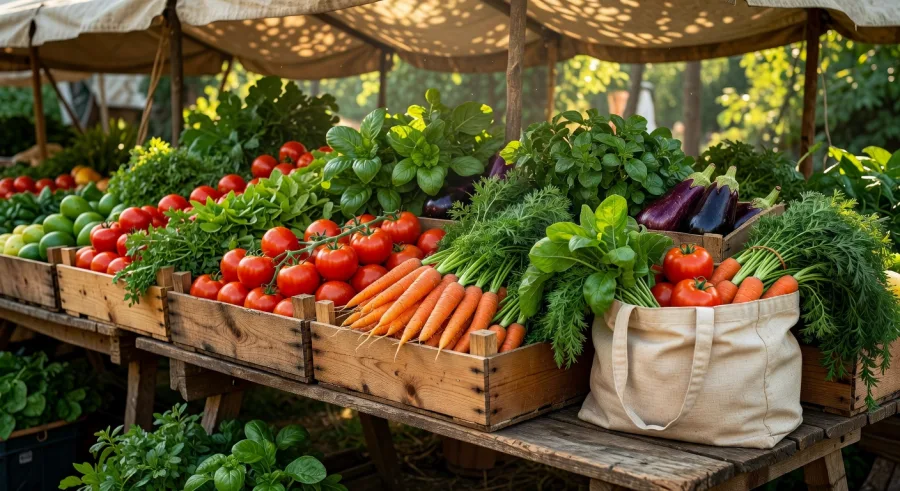
When you arrive at a participating market, the process is simple. Vouchers function similarly to cash — you hand them to an authorized vendor in exchange for eligible fresh produce. Eligible items typically include fresh fruits, vegetables, and fresh-cut herbs. Processed items, plants, and non-food products are generally not covered, but rules can vary slightly by state.
The value you receive goes beyond the dollar amount on the voucher. Fresh produce purchased at farmers markets is often higher quality and more nutrient-dense than what is available at large grocery chains, and buying locally supports farmers in your community. Many seniors also find that visiting a farmers market becomes a social activity they look forward to each week throughout the growing season.
Do Not Leave This Benefit on the Table
Every year, SFMNP vouchers go unclaimed simply because eligible seniors do not know the program exists or assume the benefit is not significant enough to pursue. Given that many states now supplement the federal minimum, and that some local programs add even more on top, the real value of this benefit may be higher than you expect. Taking a few minutes to check your eligibility and apply could mean weeks of fresh, nutritious food at no cost to you.
Your Next Step
Visit the USDA Food and Nutrition Service website and search for the SFMNP contact page for your state. You can also call your local Area Agency on Aging — dial 1-800-677-1116 (the Eldercare Locator, a free national service) to be connected with local aging services that can walk you through the application process. Do not wait — seasonal programs fill up fast, and the sooner you apply, the better your chances of receiving the full benefit available in your area.
Advertisement