Advertisement
If you have noticed bare patches in your garden beds, mysterious cracks spreading across your driveway, or walkway slabs that seem to shift a little more each season, you might be blaming age, tree roots, or just bad luck. But there is a strong chance the real culprit is something most homeowners rarely think about: gutter damage to landscaping, driveway, and walkway surfaces caused by overflowing, sagging, or failing gutters. For homeowners 55 and older living on a fixed income, these slow-moving problems can quietly drain thousands of dollars from retirement savings — and the frustrating part is that new gutters could have stopped most of it.
How Bad Gutters Cause Outdoor Damage You Might Not Connect
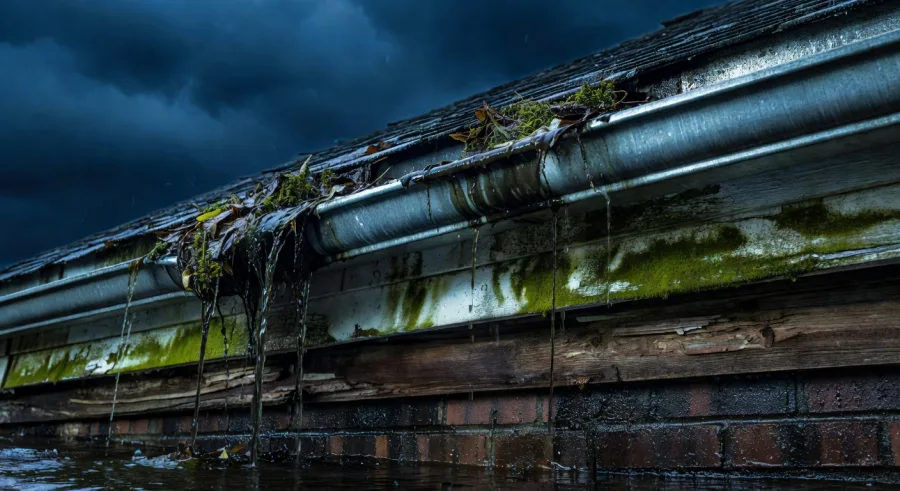
Gutters have one job: to collect rainwater from your roof and direct it safely away from your home through downspouts. When they fail — whether from clogs, sagging sections, cracks, or improper slope — that water has to go somewhere. And it almost always ends up where you do not want it.
Most people think about basement flooding or foundation cracks when they hear about gutter damage. Those are serious problems, and water damage from failing gutters can cost anywhere from $5,000 to $10,000 or more in foundation repairs alone. But the outdoor damage that happens above ground, right in front of your eyes, often goes completely unnoticed until the repair bills start piling up.
Your Landscaping Takes a Hidden Hit
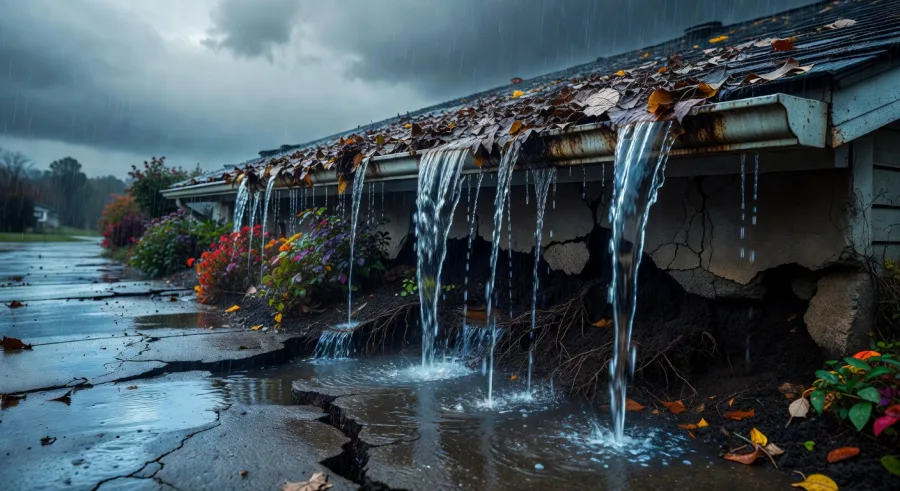
When gutters overflow, sheets of water cascade off the roofline and pound the ground below. Over time, this erodes the soil in your flower beds and garden borders, washing away mulch, exposing plant roots, and killing established plantings you may have spent years growing. Soil erosion from gutter damage to landscaping can also carve channels and ruts along the side of your home that look unsightly and make mowing or gardening difficult.
Replacing eroded landscaping, regrading soil, and replanting beds is not cheap. Depending on how much ground is affected, homeowners can easily spend several hundred to several thousand dollars restoring what steady gutter overflow destroyed over just a few rainy seasons.
Driveways Crack and Crumble Faster Than They Should
Water that pours off a roof without proper gutter control does not just disappear — it flows along the ground and often pools near or under the edges of your driveway. When water works its way beneath asphalt or concrete, it softens the base material underneath. In colder months, that trapped moisture freezes and expands, forcing cracks upward from below. You then see the results: spiderweb cracks, potholes near the edges, and sections that sink or heave unevenly.
Driveway repairs and resurfacing can run from a few hundred dollars for crack sealing to several thousand dollars for full replacement. Many homeowners repeat these repairs every few years without ever suspecting that gutter damage to their driveway is the underlying cause. Fixing the surface without fixing the water source is like mopping up a leak without turning off the faucet.
Walkways Heave, Shift, and Become a Safety Hazard
The same freeze-thaw cycle that attacks driveways is even harder on concrete walkways and front path pavers. Water from overflowing gutters saturates the soil beneath your walkway slabs. As that soil shifts, swells, and erodes, individual slabs begin to tilt, rise, and separate. What starts as a slightly uneven step can become a genuine tripping hazard — a serious safety concern for anyone with balance or mobility challenges.
Repairing or replacing heaved walkway sections is another recurring cost that many older homeowners simply absorb without understanding why it keeps happening. The connection between gutter damage and walkway repairs is real, and addressing it at the source saves both money and worry about falls near your front door.
Deck Boards and Wood Structures Are Also at Risk
If you have a deck or wooden porch near a roofline, failing gutters put those surfaces directly in the path of constant water exposure. Deck boards that are repeatedly soaked by gutter overflow rot faster, develop mildew, and require refinishing or replacement far sooner than they should. Wood joists and support posts can also begin to decay from the bottom up — a problem that is expensive to fix and potentially dangerous if left too long.
Why Replacing Your Gutters Is One of the Smartest Home Investments You Can Make
New gutters for an average home typically cost between $1,000 and $3,000 — a fraction of what repeated landscaping, driveway, walkway, and deck repairs can add up to over five or ten years. When you look at it that way, gutter replacement is not just a home maintenance expense. It is a way to stop a slow financial drain before it gets worse.
- Seamless gutters are cut to fit your home in one continuous piece, which means fewer joints where leaks develop. They last longer and require less maintenance than older sectional gutters.
- Gutter guards reduce the buildup of leaves and debris inside the gutter channel, cutting down on the clogs that cause overflow in the first place.
- Proper downspout extensions direct water several feet away from your foundation, driveway edges, and landscaping — making sure runoff goes where it causes the least harm.
- Correct slope and alignment ensure water moves efficiently toward the downspouts instead of pooling and spilling over the sides.
A $1,500 gutter replacement today could easily prevent $8,000 to $15,000 in combined landscaping, hardscape, and structural repairs over the next decade.
Signs Your Gutters May Already Be Causing Outdoor Damage
Walk around your home after the next rainstorm and look for these warning signs:
- Water stains or soil splatter marks along your foundation or siding
- Eroded mulch or bare soil channels along the drip line of your roof
- Cracks near the edges of your driveway or pooling water close to the base
- Walkway slabs that have shifted, tilted, or separated at the joints
- Soft, spongy, or discolored deck boards near the roofline
- Gutters that visibly sag, pull away from the fascia, or overflow during rain
If you spot two or more of these signs, it is worth having a gutter professional assess your system before the next repair bill arrives.
Take the Next Step Before the Damage Gets Worse
The good news is that gutter replacement is a straightforward project with a clear payoff. Many gutter companies offer free inspections and estimates, and some utility programs or local home repair assistance initiatives may offer help to qualifying older homeowners — so it is worth asking when you call.
Do not wait until a cracked driveway, eroded garden, or heaved walkway forces a much larger repair bill. Contact a licensed gutter contractor in your area, ask for a free estimate, and find out what it would cost to protect everything outside your home — starting from the roofline down.
Advertisement